Worth the Wait: Cambridge Adds Its Voice to UK Psychedelic Science
As it celebrates its first anniversary, the Cambridge Psychedelic Research Group (CPRG) is running multiple clinical trials with psychedelics, designing an MDMA-assisted study for anorexia nervosa, and developing group therapy models to make psychedelic-assisted treatment more accessible and scalable for health services in the UK. Psychedelic Alpha’s Charles Bliss reports.
Cambridge—one of the world’s leading research universities—has been conspicuously absent from the UK’s psychedelic research landscape. Imperial College London led the field from 2008, launching the first formal Centre for Psychedelic Research in 2019. King’s College London followed with clinical trials from 2017 and opened its Centre for Mental Health Research and Innovation in 2023. Others including Bristol, Exeter and University College London established their own psychedelic research programmes. While these institutions built reputations as psychedelic research hubs, Cambridge remained on the sidelines.
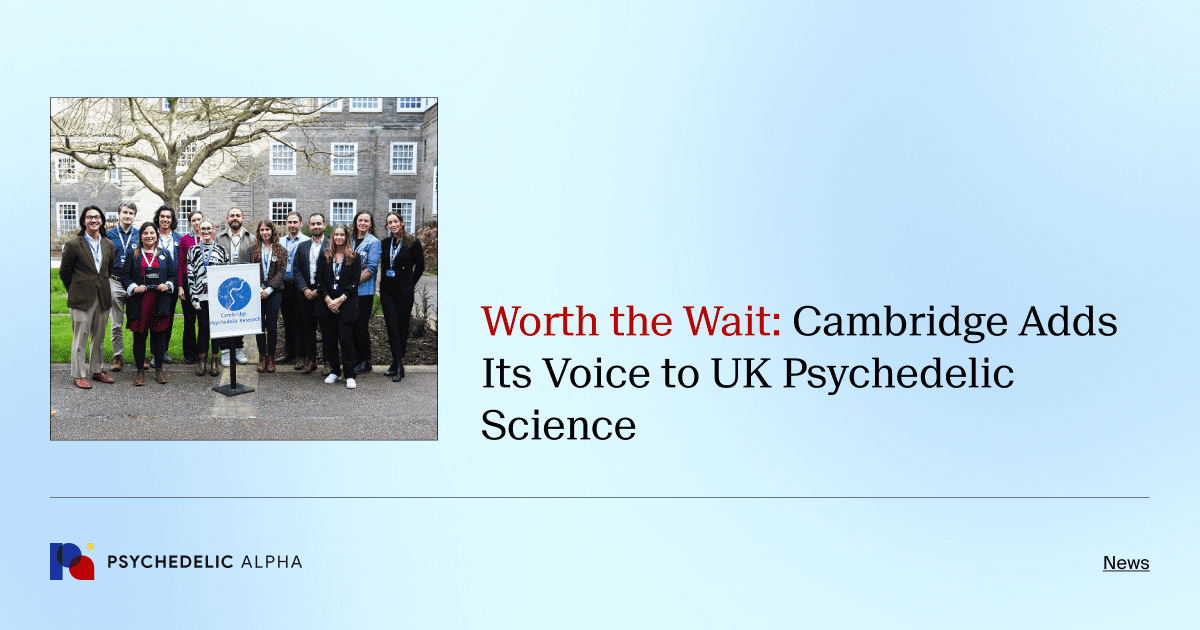
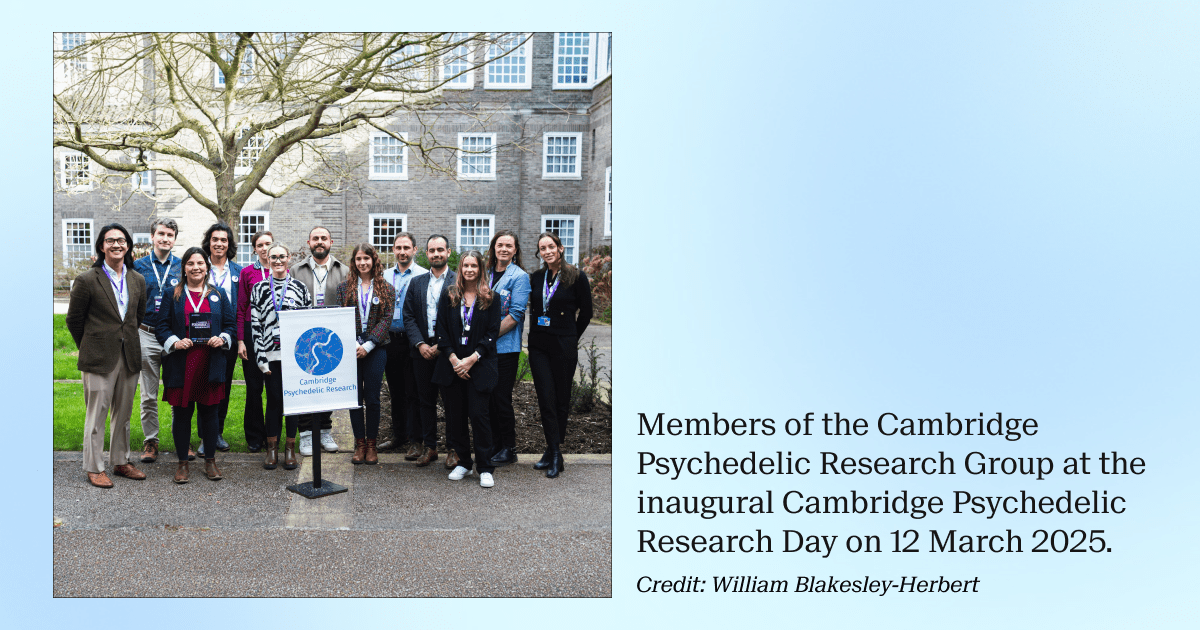
All that changed in 2024, when the university secured its Home Office licence and established the Cambridge Psychedelic Research Group (CPRG), creating the first legal pathway for psychedelic-assisted treatments in the East of England. The group officially launched in March 2025 with its inaugural research day at Clare College that drew more than 150 attendees.
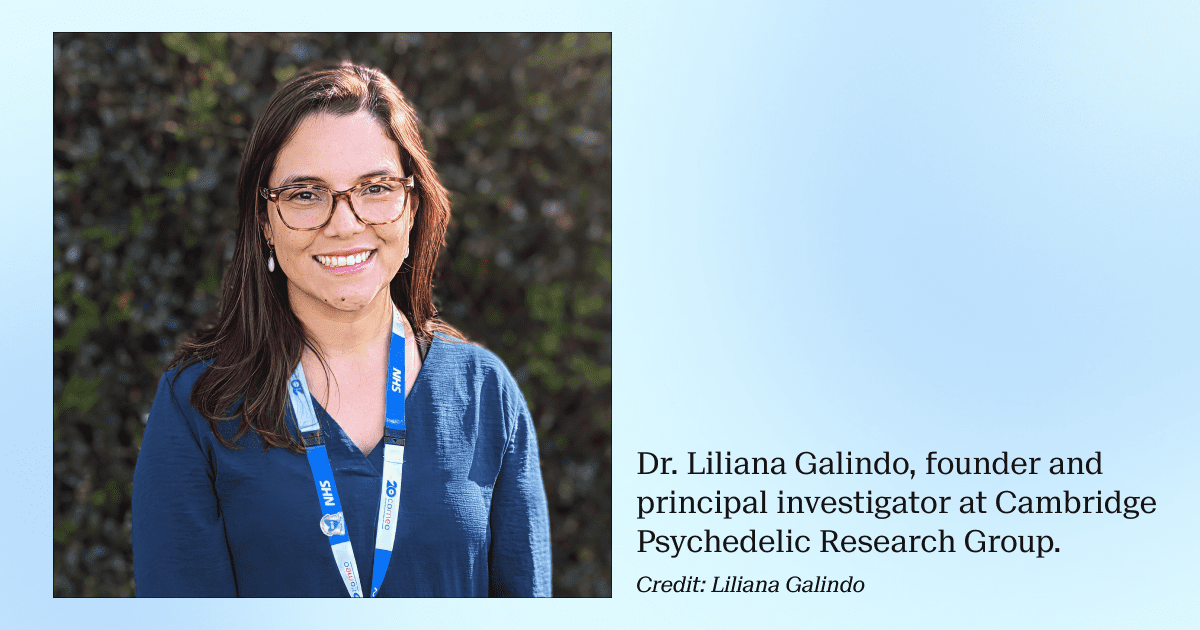
Dr Liliana Galindo, consultant psychiatrist and principal investigator, founded the group. She trained in Spain under psychopharmacologist Prof Magí Farré, working with novel psychoactive substances from 2014.
“At Cambridge, we were late joining the psychedelic renaissance,” Galindo told Psychedelic Alpha, noting that she spent several years navigating institutional and regulatory obstacles. “The reality is that it took a long time.”
But now, one year after its official launch, the CPRG is involved in a number of groundbreaking clinical trials and real-world studies; is building the infrastructure and clinical protocols necessary to administer psychedelic-assisted therapy via the National Health Service (NHS), the country’s publicly funded universal healthcare system; and is looking forward to hosting its second annual Cambridge Psychedelic Research Day in April.
Partnership Model
The group represents a partnership between the University of Cambridge, Cambridgeshire and Peterborough NHS Foundation Trust (CPFT), and Cambridge University Hospitals NHS Foundation Trust (CUH). Galindo explained that each institution brings different strengths: CPFT provides the mental health NHS trust and clinical services; the university contributes academic expertise and research infrastructure; CUH offers the general hospital and NIHR clinical research facilities.
“The full group is composed of members of the three institutions,” Galindo explained. “We have clinicians from CPFT and CUH, we have researchers from the university, as well as other academics and some clinical researchers.”
Many CPRG members hold split positions between clinical work and research. Galindo herself works part-time as a consultant psychiatrist and part-time as a principal investigator. This structure means researchers understand NHS realities while clinicians stay connected to cutting-edge science.
The university has access to imaging technologies and laboratory facilities. Most trials will run at CPFT’s research unit—based at one of the UK’s top NHS trusts for mental health research—and at the NIHR Cambridge Clinical Research Facility at Addenbrooke’s Hospital. The group now has two dosing rooms operational, with a third planned.
Cambridge’s academic departments enable collaborations in neuroscience, psychiatry, psychology, immunology and consciousness studies, while the NHS trusts provide patient populations and clinical trial infrastructure.
“Cambridge is very potent in terms of all the different academics in the different departments,” Galindo said. “One of our goals is around how we can create collaborations to make sure that we also start to study the mechanisms underlining the therapeutic potential.”
Research Pipeline
The CPRG’s first trial launched in November 2024: a Phase 2 study of methylone (TSND-201)—an analogue of MDMA—for post-traumatic stress disorder (PTSD), part of Transcend Therapeutics’ IMPACT-1 programme.
“Working with TSND-201 was exciting,” Galindo said. “The participants were relaxed and calm during the dosing session, making the experience very easy for the participants and our staff.”
Transcend, which looks set to be acquired by Japanese pharmaceutical company Otsuka in a deal worth up to $1.23 billion by Q2, shared positive topline results from the trial in March 2025, as reported by Psychedelic Alpha. The full results published in JAMA Psychiatry in February this year found that four weekly doses of methylone reduced severe PTSD symptoms significantly more than placebo, with benefits lasting at least six weeks after the final dose. The treatment was well-tolerated with mostly mild, short-lived side effects, and 57% of the 65 participants showed treatment response compared to just 19% on placebo.
Transcend will seek to launch a Phase 3 programme this year.
The CPRG commenced two psilocybin trials between 2025 and the beginning of 2026: one targeting treatment-resistant depression, the other for major depressive disorder. The group expects to start a third at the end of this year for generalised anxiety disorder.
Beyond clinical outcomes, the group is also conducting experimental studies on underlying mechanisms—the first of which examines how psychedelics might affect inflammation markers. It will investigate immunomodulation as a potential therapeutic mechanism in psychedelic-assisted therapy, specifically with psilocybin.
“We have academic experts in psychiatry and immunology,” Galindo said. “In collaboration with Mary-Ellen Lynall and Richard Dear, we are studying how psilocybin might affect the immune system and potentially what will be the specific role of this in response to treatment.”
In Cambridge’s Department of Psychology, Prof Tristan Bekinschtein and Dr Evan Lewis are studying DMT through the lens of neurophenomenology—combining brain dynamics data with detailed phenomenological tracking.
“His lab developed a technique where they can track changes in brain dynamics, and they’re trying to match this with changes in symptoms and behaviour,” Galindo said.
In collaboration with Prof Gene Feder OBE from Bristol Research on Gender, Health and Trauma (BRIGHT) at the University of Bristol and Dr Henry Fisher from Clerkenwell Health, the group is exploring how to adapt psychedelic-assisted therapy for survivors of intimate partner violence with PTSD. PhD candidate Giovanna Saad is exploring its role in facilitating post-traumatic growth among survivors.
MDMA-Assisted Group Therapy for PTSD
A new clinical trial led by the CPRG in partnership with the charity Supporting Wounded Veterans will explore the therapeutic potential of MDMA-assisted group therapy for individuals with PTSD. The study, currently in fundraising, will focus on UK veterans, first responders and war correspondents—groups with disproportionately high rates of chronic, treatment-resistant PTSD.
The trial will extend existing work on MDMA-assisted psychotherapy into a group setting, examining whether shared treatment models can improve both clinical outcomes and scalability. Participants will receive MDMA in a controlled therapeutic environment alongside structured psychological support, with the group format designed to facilitate collective processing of trauma and peer connection.
Galindo said the study aims to contribute to the growing evidence base for psychedelic therapies in PTSD, while supporting the CPRG’s broader aim of developing cost-effective, NHS-compatible models of care.
MDMA Trial for Anorexia Nervosa
The CPRG is also designing a Phase 2 trial of MDMA-assisted Internal Family Systems (IFS) therapy for young adults with anorexia nervosa, which carries the highest mortality rate of any psychiatric disorder.
The proposed study brings together Cambridge, Imperial College London and Inner Space Research in Utah. The collaboration emerged after the group’s inaugural Cambridge Psychedelic Research Day, where CPRG members connected with neuroscientist and psychiatrist Dr David Erritzøe at Imperial, whose team recently completed a psilocybin trial for anorexia.
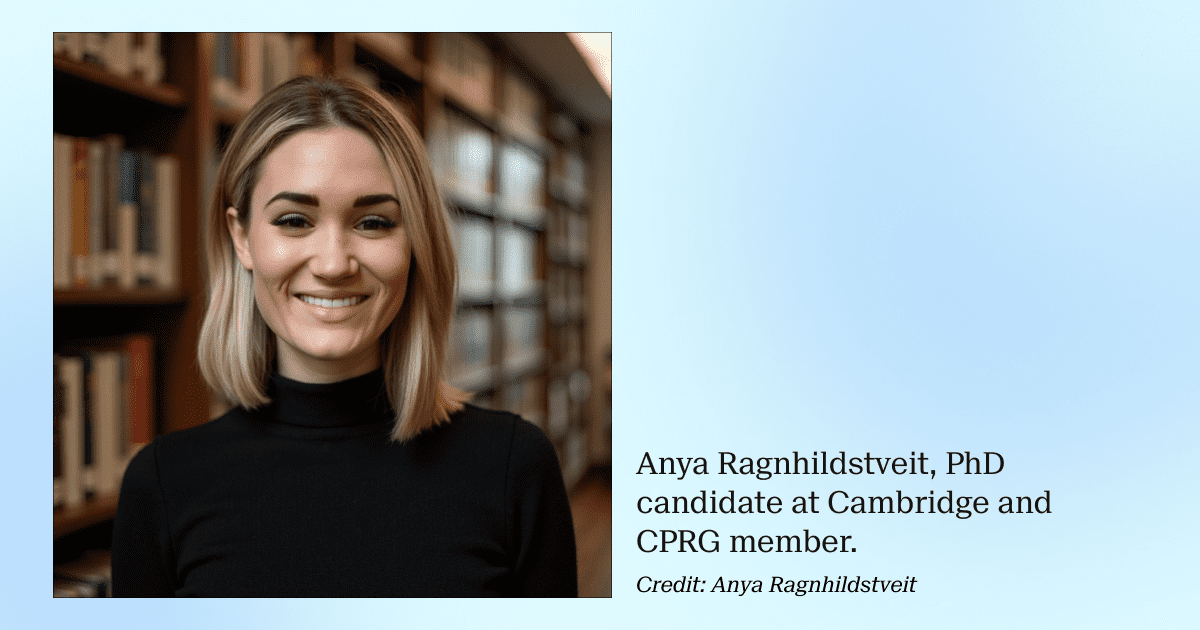
“When I spoke with David at the conference, he mentioned that a few colleagues in Imperial’s Division of Psychiatry––namely Prof Dasha Nicholls and Dr Victoria Burmester––were interested in the potential of MDMA as a treatment for this population,” said Anya Ragnhildstveit, a PhD candidate at Cambridge and CPRG member.
According to the team, the trial is being developed through cross-site collaboration, alongside a wider network of experts in psychedelic therapy, IFS and eating disorders, including Prof David Nutt, Dr Reid Robison and Prof Camilla Lindvall Dahlgren.
A notable feature of the proposed study is its psychotherapeutic model. Developed by Dr Richard Schwartz, IFS is a trauma-informed, non-pathologising approach that conceptualises the mind as containing different “parts” with distinct roles and protective functions. The model has gained traction among psychedelic therapists in real-world settings, although formal clinical evidence remains limited.
“While the evidence base for IFS is not as strong as it is for other, more established psychotherapies, many patients with eating disorders do not sufficiently benefit from existing treatments,” Ragnhildstveit said. “We’re even seeing shifts toward palliative care and assisted dying for people who have exhausted all available options. It’s time for a radically innovative, patient-driven approach to care.”
The rationale for pairing MDMA with IFS is that this combination may be especially well suited to the internal conflict, self-criticism and protective adaptations related to food, control and identity that often characterise anorexia. In this context, MDMA may help reduce fear and defensiveness, potentially creating a therapeutic window for deeper psychological work.
“Our vision is to help young adults with anorexia become their own healers by helping them build an inner therapeutic approach they can rely on long after treatment ends,” Ragnhildstveit said. “We want to support a model of recovery that helps people reclaim agency rather than handing it over to medications, therapists or caregivers.”
Ragnhildstveit’s PhD research broadly examines mental health treatments and service pathways for young people with eating disorders, particularly the transition from child to adult NHS services. This work sits within a wider context of rising eating disorder burden worldwide.
A recent study from her group at Cambridge found that 1 in 20 children and young people meet criteria for an eating disorder—a global prevalence substantially higher than previously estimated. The COVID-19 pandemic likely contributed to this increased burden, with eating disorder-related A&E attendances among young people nearly tripling in the first year of the pandemic.
“To this day, there hasn’t been a single approved medication for anorexia,” Ragnhildstveit said. “With historically poor treatment response, high relapse rates, rising prevalence and hospital admissions, and inadequate resources to meet growing demand, we can no longer ignore this issue.”
Such urgency has fuelled growing interest in novel interventions that not only address eating disorder symptoms, but also the deeper psychological and relational dynamics of the illness. For the team behind the MDMA trial, the goal is to evaluate a new treatment model while expanding the evidence base for a population long underserved by psychiatric research, Ragnhildstveit said.
Cambridge Psychedelic Research Day
The inaugural Cambridge Psychedelic Research Day took place on 12 March 2025 at Clare College. Keynote speakers included David Erritzøe from Imperial College London, Celia Morgan from the University of Exeter, Guy Goodwin from Compass Pathways, Anne Katrin Schlag from Drug Science, Hubertus Himmerich and Liam Modlin from King’s College London, and Henry Fisher from Clerkenwell Health.
“Our main goal was to bring both clinicians and researchers and make sure that it was accessible for everyone—not just for people who are already involved in the field, but it could be for clinicians that are curious,” Galindo said.
The agenda covered the latest research findings alongside practical considerations for NHS integration. Sessions addressed safety, efficacy data across different mental health conditions, and delivery models.
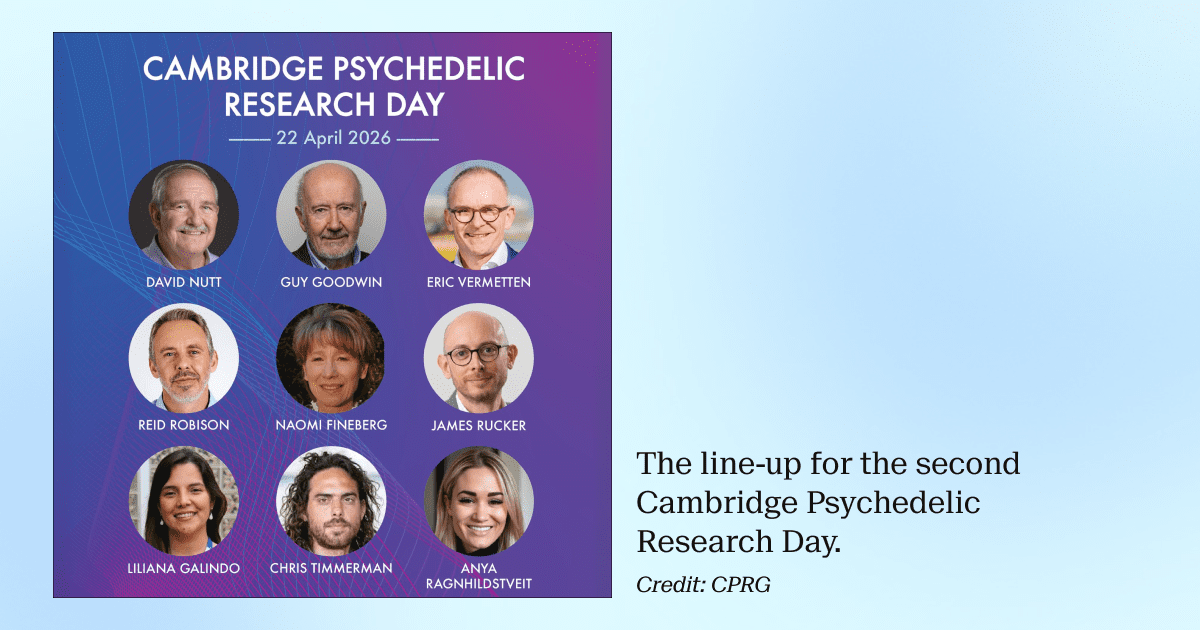
The second Cambridge Psychedelic Research Day takes place on 22 April 2026. The format will expand on the first event’s success, bringing together researchers, clinicians and stakeholders to share progress and address challenges. The programme features speakers including David Nutt, Eric Vermetten, Naomi Fineberg, Guy Goodwin, Reid Robison, Chris Timmermann and James Rucker, alongside researchers working at the forefront of MDMA, psilocybin and ketamine-assisted therapies.
The one-day meeting will showcase emerging clinical data and translational research across indications including PTSD, mood disorders, OCD and eating disorders. Galindo said that, with contributions from groups at Imperial College London, University College London, King’s College London and Leiden University, the event reflects Cambridge’s growing role in the UK ecosystem—convening academic, clinical and industry stakeholders around the development of scalable, evidence-based psychedelic therapies.
“MDMA and psychedelic-assisted therapies offer the possibility of doing deep, intensive work over a relatively short period—treating the root causes of distress rather than just managing symptoms,” she said. “That represents a real shift in psychiatry.”
“Our hope is that these treatments can bring meaningful change for people with conditions that have not responded to standard treatment, and that they are delivered safely, inclusively and within the NHS—so they are accessible to those who need them most, not just those who can afford them.”
Join thousands of psychedelics insiders
Get the weekly psychedelic medicine briefing.
A free weekly digest covering trials, regulation, policy, and access.
By signing up, you agree to our privacy policy. You can unsubscribe at any time.