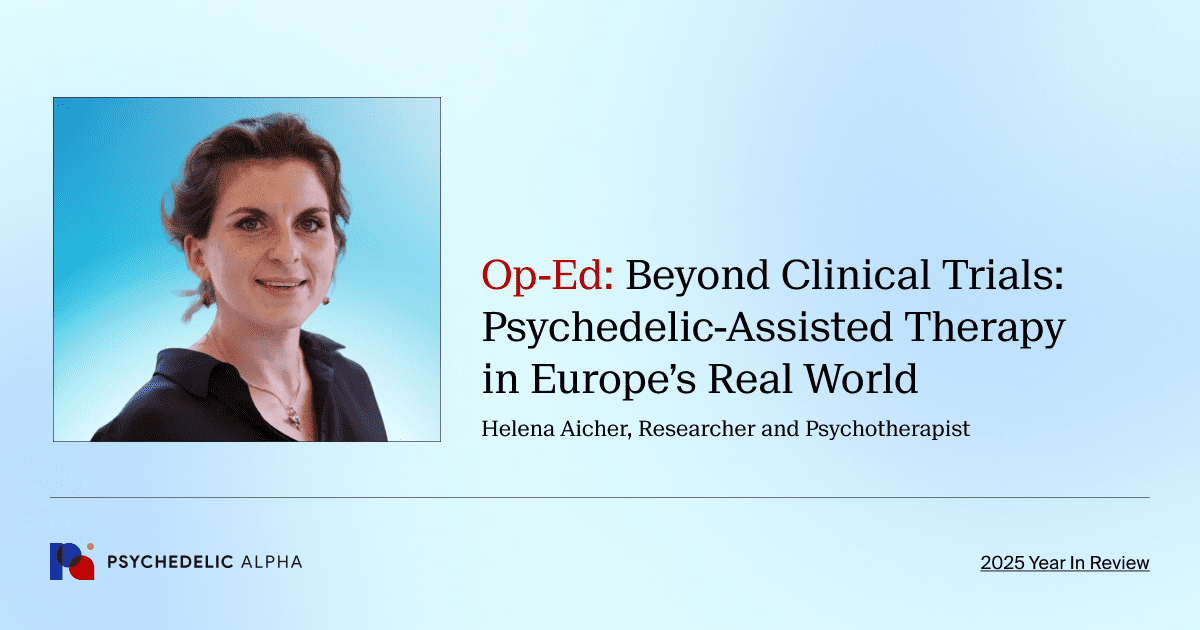
Op-Ed: Beyond Clinical Trials: Psychedelic-Assisted Therapy in Europe’s Real World
Europe has become something of a testing ground for what psychedelic therapies might look like beyond the confines of clinical trials. While conventional approval pathways remain central to long-term healthcare integration, several countries have developed alternative access models, which in 2025 came to include Germany, Norway, and the Czech Republic.
Here, Helena Aicher, a researcher and psychotherapist working within Switzerland’s framework for limited medical use, reflects on how Europe’s psychedelics landscape evolved in 2025.
Looking back, 2025 may be remembered as the year psychedelic-assisted therapy (PAT) became institutionally unavoidable in Europe. In several countries, PAT is no longer just a research topic, and some regulators acknowledged that waiting exclusively for conventional drug approval pathways leaves patients without viable options.
What distinguishes 2025 from earlier phases is the conditions under which that development occurs. PAT is now developing under intense public, political, and commercial attention, which is fundamentally different from the low-visibility environment in which Europe’s earliest real-world model emerged in Switzerland.
In that sense, 2025 could be seen as a year of careful opening toward alternative pathways to access in Europe, implemented alongside (not in place of) conventional drug approval routes. PAT remains framed as an exceptional treatment option, yet those exceptions might become structurally relevant elements of mental health systems, governance debates, reimbursement discussions, and public engagement.
Europe’s regulatory landscape for PAT reflects nonlinear, carefully negotiated steps, and national approaches reflect specific cultural contexts. The approaches differ in scope, ambition, and legal architecture. Yet together, they signal a broader shift: PAT is no longer treated as an isolated curiosity or a speculative future. It is now a concrete policy problem that regulators actively manage.
Switzerland’s long-running limited medical use program continues as a potential reference case, Germany took cautious but important steps toward compassionate use, and the Czech Republic moved toward explicit legislation for psilocybin in mental health care. In none of these models is PAT a therapy designed for broad population-level implementation yet. All frame it as a niche intervention: selective and resource-intensive. The key question is no longer if PAT can exist in European healthcare systems, but what kind of existence it should and could have.
Development of Access Models in Context
Switzerland as a reference case?
In Switzerland, PAT continued along a path that now appears distinctly mature. More than a decade after limited medical use was reintroduced in 2014, the Swiss model has shown that physician-initiated, non-commercial medical access to psychedelics can be sustained safely over time, albeit at a deliberately small scale.
What began as a modest, physician-driven initiative has evolved into a structured but flexible system. Several hundred patients per year receive treatment with LSD, psilocybin, or MDMA under individual authorizations (issued by the Federal Office of Public Health), typically for severe, treatment-resistant conditions (depression, addiction, PTSD, anxiety, and other predominantly psychiatric indications; and, in a smaller number of cases, for non-psychiatric indications). The treatment is usually embedded within comprehensive psychiatric care and delivered across diverse clinical settings, including private practices and clinics, outpatient and inpatient contexts, and group- and individual-based formats. PAT is often provided by interdisciplinary teams, reflecting the integration of PAT into established therapeutic frameworks.
In 2014, PAT attracted little public or political attention. There was no widespread media coverage, no venture capital interest, no international hype cycle, and minimal pressure to scale or standardize. Psychedelics were not yet framed as a transformative frontier in mental health. This relative invisibility mattered: It allowed the Swiss program to develop slowly, incrementally, and largely outside the spotlight. Early practice unfolded without strong external pressure to commercialise, demonstrate rapid impact, or resolve all ambiguities immediately. Professional responsibility and bottom-up safeguards had time to evolve. In retrospect, this low-attention environment may have been an important enabling condition. PAT is neither forbidden nor mainstream, and it exists as a niche practice within psychiatry.
The Swiss experience demonstrates that non-commercial, physician-led models can persist over time, tight access does not preclude institutional legitimacy, and slow development can function as a safeguard. At the same time, the Swiss practice is not static. Increasing patient numbers and growing visibility are placing new demands on the system, raising questions around training standards, equity of access, long-term sustainability, and the consistent maintenance of quality and safety.
This model cannot be copied wholesale into other contexts. Germany and the Czech Republic are developing their approaches under conditions of intense visibility. Psychedelics today are widely discussed, politically salient, and closely watched by media, regulators, professional bodies, and commercial actors alike. Every regulatory move carries symbolic weight. This level of attention changes what is possible. The slow, informal, physician-driven evolution that characterized Switzerland’s early years is far harder to sustain when expectations are high and tolerance for ambiguity might be low. Seen in this light, the approaches in Germany and the Czech Republic might reflect an acute awareness that PAT now enters healthcare systems already burdened with hopes, fears, and scrutiny.
Germany and the Czech Republic
In Germany, the most significant development came in the second half of 2025, when compassionate use of psilocybin for depression became formally possible. After the EPIsoDE psilocybin for depression trial, regulators explicitly acknowledged that some patients may require access to PAT before full market authorisation. Yet as of the end of 2025, patients had not yet been treated under these pathways. Formalities prolong the process.
The Czech Republic moved toward explicit legal frameworks for PAT through a criminal law amendment set to take effect in 2026, legalizing the medical use of psilocybin under strict conditions. The measure is intended for patients with treatment-resistant conditions, particularly depression, where conventional treatments have failed. Access will initially remain limited, with therapeutic use restricted to highly structured settings, synthetic psilocybin, and delivery by specially trained psychiatric professionals under defined clinical protocols.
Shared Challenges
Bottleneck: Who Pays?
Across all contexts, one issue remains unresolved: reimbursement. This might be the point at which regulatory acceptance confronts real-world feasibility and access questions: without viable funding pathways, PAT risks remaining accessible only to those who can afford it privately.
An instructive development in 2025 came from Norway, where public health authorities approved reimbursement for generic ketamine in treatment-resistant depression. This decision challenges a core assumption of drug development, that reimbursement must be tied exclusively to proprietary, market-authorized formulations. Spravato (an esketamine nasal spray product marketed by Johnson & Johnson) followed a conventional pharmaceutical pathway. Generic ketamine (a long-established anesthetic with decades of safety data), by contrast, is used off-label in psychiatric contexts. By choosing to reimburse generic ketamine, Norway decoupled clinical legitimacy from commercial exclusivity. This doesn’t mean that regulatory approval is irrelevant, but that it might not the only route to public funding when safety, tolerability, and efficacy are well supported.
For psychedelics, this raises a fundamental question: Should insurance coverage depend exclusively on proprietary psychedelic products or could non-patented substances be covered if evidence is sufficient?
Europe’s reimbursement challenges are not unique. In Australia, where the first PAT clinic opened in 2024 after the Therapeutic Goods Administration (TGA) approved the medical use of MDMA for PTSD and psilocybin in specific cases in 2023, reimbursement models are beginning to emerge. The country’s lagest health insurance company (Medibank) announced a pilot program to reimburse MDMA for PTSD offered in certain clinics. Government funding also plays a role: the Australian Department of Veterans’ Affairs covers PAT for eligible veterans, complementing insurance-based and other payment options, for example through patient support funds. While these options are not yet comprehensive coverage solutions, they might pave a way for further considerations toward broader reimbursement frameworks. These intermediate models may help bridge the gap between exceptional access and systemic inclusion.
Real-World Data
Norway also highlights a second real-world issue: centralised data collection. Norway’s centralised patient registries allow systematic tracking of safety and outcomes in real-world treatment. This infrastructure addresses a persistent dilemma in the field: clinical trials generate high-quality evidence under controlled conditions, while real-world access expands without standardized data. Easy-to-use registries might offer a middle path: real-world evidence without turning care into constant research.
Beyond Regulators
Another defining feature of 2025 was that PAT is no longer shaped only by regulators, researchers, and clinicians. One example was PsychedeliCare, a European Citizens’ Initiative seeking to place PAT on the EU policy agenda. Comparable citizen-driven initiatives do not exist for other pharmacological treatments. Psychedelics are pharmacological agents, yet the therapies built around them challenge conventional distinctions between drug, psychotherapy, and experience-based care. PsychedeliCare might reflect this hybridity by calling for research funding, regulatory coordination, standards, and explicit patient involvement. PsychedeliCare also highlights a broader point: PAT raises questions of legitimacy, participation, and access that extend beyond technical regulation.
A parallel development was the Psychedelic Lived Experience Summit, which foregrounded first-hand experiences as a form of knowledge. By emphasizing lived experience, the summit addressed a recurring gap between clinical evidence and real-world practice, and it reflected growing recognition that implementation cannot rely only on standardized trial metrics.
2025 in Perspective
Overall, “real-world” developments in 2025 in some leading European countries pointed to a shift away from novelty, toward governance, but also toward sobriety, and constructive disillusionment. PAT is no longer primarily discussed as a breakthrough waiting to be tapped. Instead, it is increasingly understood as a complex intervention whose effects depend as much on context, preparation, integration, and patient factors as on the pharmacological agent itself. This shift has probably led to a more realistic assessment of both its potential and its limitations.
The central questions are no longer if PAT works in principle, but under what conditions, for whom, and at what cost – clinically, ethically, and institutionally. This growing realism underscores the need for further and complementary types of evidence. While randomised controlled trials (RCTs) remain indispensable, they alone are not sufficient to answer the questions relevant in the context of PAT. Complementary research approaches such as registry-based analyses, other pragmatic studies embedded in clinical practice, or qualitative research, might be important complements to understanding how PAT works outside of strictly controlled trial settings.
At the same time, some challenges are intensifying. The risks of moving too quickly are real: premature broader implementation could outpace training standards, data infrastructure, and ethical safeguards. But the risks of moving too slowly are equally tangible, as they leave patients without options and push practice into informal or poorly regulated areas.
What happens next will depend on responsible action: on how these European countries handles access without overload, evidence without reductionism, responsibility without paralysis, and legitimacy without hype in a field that has become unmistakably real.
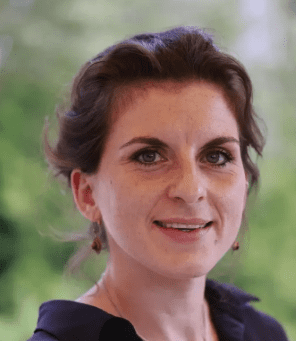
Helena Aicher
Helena is a research associate at the Universities of Zurich and Basel, where she is involved in clinical trials investigating psychedelics from multiple perspectives. Alongside research, she works as a psychotherapist with psychedelic-assisted therapy within Switzerland’s framework for limited medical use, primarily in group settings. Helena is also active as a trainer in therapist training programs and serves as an advisor to several institutions.
Looking for more?
Hear from leaders across the psychedelic medicines field.
A free weekly digest covering trials, regulation, policy, and access.
By signing up, you agree to our privacy policy. You can unsubscribe at any time.