The Psychedelic Practitioner Issue 4: Integration
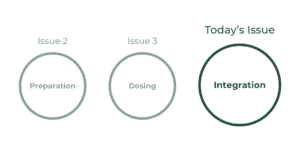
Welcome to Issue 4, which focuses on Integration: the last, potentially most transformative, stage of the psychedelic journey.
This Issue features an in-depth conversation with Dr. Ros Watts, who reflects on what she’s learned about integration through years of clinical trial work, and how those insights have shaped her more recent shift toward a community‑based model of care.
We also hear from several other leading voices in the field, including Otto Maier, Jules Evans, Marc Aixalà and Dr. Bill Brennan, who offer their perspectives on post‑psychedelic challenges and highlight key considerations for a grounded integration process. As always, this Issue includes a contribution from our Ethics Corner columnists, alongside thematic insights and broader updates from us, the Editors.
Thank you to everyone who has been with us throughout this three‑part series. We’re deeply grateful for your engagement, and we warmly welcome any reflections or suggestions for future Issues.
In the spirit of spring, we’re stepping into new terrain. Our next Issue will explore the role of groups in psychedelic practice.
Your feedback continues to shape these conversations, and our inboxes are always open.
Alice Lineham and Josh Hardman
The Editors, The Psychedelic Practitioner
Subscribe to future issues
Practice-focused insights, delivered to your inbox.
Issues are currently published every other month. Join our free newsletter to receive them:
By signing up, you agree to our privacy policy. You can unsubscribe at any time.
Sponsor Message

Psychedelic Alpha is grateful to the folks at Fluence, sponsors of The Psychedelic Practitioner.
Your Seat is Waiting in a Fluence April Session
Ready to move from the sidelines into the heart of the field? Enroll in Fluence’s Essentials of Psychedelic Therapy this month and begin your journey with a group of peers who are as committed to the future of healing as you are.
- A Blended Path: Master the foundations through high-quality on-demand content and deepen your practice in live, expert-led online sessions.
- Lifetime Connection: Join a global community of 8,000+ alumni, gain a spot in our professional directory, and access our private networking groups.
Professional Growth: This is your foundation for an ethical, sustainable, and soulful psychedelic practice.
Vitals
Vitals is your pulse check on the psychedelic field: a concise scan of the developments, discoveries, and debates that matter most for practitioners. Each item ends with the Bottom Line, for those of you who are pushed for time or want our read on the news.
Clearing the Bar: Compass Notches Second Positive Phase 3 Psilocybin Readout
Last month, Compass Pathways released results from its second Phase 3 trial of COMP360 psilocybin for treatment-resistant depression (TRD). While some observers described the results as underwhelming, the data nonetheless met the primary endpoint and, taken together with the first Phase 3 readout, is believed by many to be sufficient to see the FDA approve the compound. If approved, COMP360 would become the first classic psychedelic to reach the U.S. market, which would involve state and federal rescheduling of the product. Several states have already introduced ‘trigger bills’ that would automatically reschedule Compass’ psilocybin if FDA approval and DEA rescheduling were to happen.
Bottom Line: Recent positive results from Compass make FDA approval of its psilocybin candidate for TRD increasingly likely, with the company planning to submit its new drug application in the fourth quarter of the year.
Readout Season: A Flurry of Phase 2a Data
Other psychedelic drug developers are making headway towards the approval post, too, with a number of Phase 2 data releases shared thus far in 2026, including:
- Helus Pharma (formerly Cybin) released data from their Phase 2a looking at its intramuscular deuterated DMT analog (HLP004) for generalised anxiety disorder (GAD). Despite reporting clinically meaningful improvements, the high dose (20mg) outcomes were not significantly different from the low dose (2 mg)e, though the study was not powered to show separation. The company told Psychedelic Alpha it was surprised by the intensity of subjective effects in the low-dose arm.
- AtaiBeckley released findings from its Phase 2a study of R-MDMA (EMP-01) for social anxiety disorder (SAD). The study was mainly geared toward ascertaining safety and efficacy, which the company says it met. On secondary measures, the oral formulation showed improvement in 49% of the active group versus just 15% on placebo, though some observers said the reduction in symptoms measured via the Liebowitz Social Anxiety Scale at day 43 were ‘meaningful, but not groundbreaking.’
- Again on the Phase 2a front, Gilgamesh Pharma printed an efficacy signal via a readout from its study of blixeprodil (GM-1020) in major depressive disorder (MDD). The company said that the 46-patient trial was positive, with a -6.3 placebo-adjusted MADRS reduction at 24-hours post-dose. Gilgamesh hopes that the NMDA receptor antagonist will be suitable for at-home use.
- Noribogaine drug developer DemeRx, meanwhile, has shared news on its Phase 1 study of the drug in 55 healthy volunteers. The trial, which took place in the UK, saw participants receive 20 mg up to 80 mg of the drug daily, or placebo, for 8 days. The company reported no serious adverse events and said that QT prolongation scaled with dose, and that the QT-prolonging effect of noribogaine “was not considered clinically relevant.”
Bottom Line: The stream of readouts from psychedelic drug developers continues to flow, though recent Phase 2a data from Helus and AtaiBeckley’s candidates show that the takeaway is not always straightforward. To stay on top of readouts, consider bookmarking our latest resource: The Psychedelic Readout Tracker.
Latest Conversations: Four New Interviews from Across the Field
We have published a number of interviews since our last Issue.
- Psychedelic Alpha Editor Josh Hardman spoke with Dr. Gitte Knudsen, who explored the role of set and setting, the neurobiology of psychedelic action, and the unique challenges of neuroimaging in psychedelic research.
- Dr. Terence Ching discussed his work leading Yale’s psilocybin trials for OCD, offering rare insights into his team’s approach to participant support and some of the phenomena observed during these studies.
- We also heard from Dr. Charles Nemeroff, a well‑known figure in psychiatry, who reflected on his involvement in the Texas ibogaine programme and highlighted several unanswered questions the field remains to address.
- Finally, Dr. Brian Barnett sat down with Hardman to discuss psychiatrists’ perceptions of the psychedelic field, the role ketamine has played in opening doors, and how psychedelic treatments might scale effectively if approved.
Introduction
The term ‘integration’ was first used in the context of psychedelics in 1980 by Stanislav Grof. Integration has since become, for many, the most important part of the entire psychedelic journey—the point at which one grounds the extraordinary in the everyday.
In the West, integration can loosely be understood as the process through which insights from psychedelic experiences are digested, contextualised, and translated into one’s life. Beyond this, the concept becomes notoriously difficult to define; no two psychedelic experiences are the same, and hence no two integration processes will unfold in the same way.
Approaches differ markedly depending on whether the experience was expansive, neutral, or challenging. For some, self-care and reflective practices such as journaling, meditation, dreamwork, or time in nature are sufficient to land and embody insights. For others—perhaps those who encountered distressing material—structured psychotherapeutic support may be more appropriate.
Clinical trial framing may also determine the nature of integration. Some protocols are guided by a specific psychotherapeutic modality, whilst others take a non-directive approach. In both cases, the onus here is primarily on the individual: insights must be actively engaged with, rather than passively received. In this sense, integration is really more of a practice than a phase.
This intentionality extends beyond clinical paradigms. Many practitioners operating in community-based, retreat, and traditional settings similarly emphasise that integration takes significant time, effort, and intentionality—without this, lessons and insights gained are likely to fade without actualising meaningful change. They also note that integration is not always about doing more; sometimes rest, stillness, and reduced stimulation are what is needed. Again, it comes back to the intention behind the action.
Beyond how one integrates, the question becomes how long one integrates for. Integration begins immediately after the experience and can span anywhere from a few days to an entire lifetime. In clinical trials, this is often operationalised as a handful of structured sessions, but in reality the process rarely ends there. Participants frequently require ongoing support and are signposted to further care, though such details are seldom reported, making integration difficult to define, measure, or standardise in research contexts.
Integration is deeply personal to the individual and the psychedelic experience it follows, but also to the cultural or clinical container in which it unfolds. Despite seeming to be a solitary process in the West, a growing number of practitioners and groups—including Charlotte James at the Psychedelic Liberation Training Program—highlight that integration cannot be separated from the social and cultural conditions people return to. What networks of support are available? What systems are people re-entering?
For individuals navigating structures moulded by colonisation, racism, and marginalisation, integration may look particularly complex—with expanded awareness may come expanded emotional capacity, but also a clearer view of the systems that oppress them. Here, integration broadens to include reconnection with ancestral traditions, cultivating horizontal networks of care, and using insights to understand one’s relationships to land, community, and the wider web of life.
Connection to community is increasingly recognised as central to integration. We remain relatively disconnected in the West—not just individually, but collectively—operating within systems that are estranged from land, purpose, meaning, and infrastructure designed for sharing and group connection. More holistic frameworks of care, like ACER (developed by Ros Watts and discussed in the interview below) and EMBARK (whose co-developer Bill Brennan shares his thoughts in Practitioner Voices), seek to address this gap.
If we look to many Indigenous plant medicine communities, meanwhile, a discrete concept of ‘integration’ is rarely required. The use of these plants, and the surrounding behavioural practices Westerners label as ‘integration’, are already deeply embedded within daily life and cosmology. Here, the collective is prioritised above and beyond the individual, with mind, body, community, spirit, and nature understood as a single, interdependent system. Integration, then, would better be described as an ongoing process concerned with restoring balance across these domains—a topic explored further in Research Radar.
Many will be familiar with the so-called ‘afterglow’, a period of heightened openness and neuroplasticity following a psychedelic experience. Although relatively short-lived—roughly two weeks—significant insights and reflections can emerge, with countless anecdotal accounts of long-awaited clarity around entrenched patterns or neglected areas of life. This unusual openness, however, can bring with it intense vulnerability. Practitioners often encourage careful attention to how one spends time and energy in the days that follow an experience.
Psychedelic experiences are not always a walk in the park. They can surface challenging material that requires significant attention during integration. Shifts in self-concept may coincide with re-evaluation of one’s vocational or relational circumstances, or even broader existential questioning.
Without adequate integration support, individuals risk experiencing a number of post-psychedelic challenges, including anxiety, ego inflation, hallucinogen persisting perception disorder (HPPD), or ontological shock, alongside missed opportunities for growth, repeated patterns, or even a compulsive return to psychedelic experiences. As Marc Aixalá outlines in his book, Psychedelic Integration, difficult experiences may stem from inadequate preparation, resurfacing trauma, harm from facilitators, or unresolved material—and each requires a different integrative pathway.
We explore these themes, and some of the emerging models attempting to address them, throughout the rest of this Issue.
In Practice: Ros Watts

Dr. Ros Watts is a clinical psychologist best known for work as Clinical Lead on Imperial College London’s landmark psilocybin-for-depression trial. Her work centres on integration, harm reduction, and the role of connectedness in therapeutic change. She developed the ACE Model and the Watts Connectedness Scale (WCS), and more recently created ACER Integration—a global, year‑long community programme (Accept, Connect, Embody, Restore) supporting participants to deepen connection with self, others, and the natural world.
“Integration has gotten bigger and bigger for me over time. It started off as the phase after a psychedelic session where you sit with the mishmash of different ideas and emotions…[but] I now see integration as a much broader thing. Life at the moment is pretty psychedelic in itself—we’re all integrating all the time.”
The Psychedelic Practitioner (TPP): How do you define integration and why is it important?
Ros Watts: Integration has gotten bigger and bigger for me over time. It started off as the phase after a psychedelic session where you sit with the mishmash of different ideas and emotions. You work to weave these into a narrative that helps you understand what your experience means, what the lessons are, and what key actions can be carried into your life moving forwards.
The whole idea of the ‘brain reset’ naturally bringing in change happens really quite rarely for a few very lucky people. Most of the time psychedelics just open the door to a window of opportunity—a period of increased flexibility and connection. But that feeling of connection to yourself, to others, and to the world, really only gets weaved into one’s life when you take active daily steps to bring in that connectedness. So for me, integration started off being about specific actions.
I now see integration as a much broader thing. Life at the moment is pretty psychedelic in itself—we’re all integrating all the time. You can’t really be human in 2026 and not be exposed to frightening, overwhelming material unless you’re really separating yourself from it.
Through all of this, people really need connectedness. We live in such a disconnected culture, most of us are not trained in this. So now, I think of integration as helping people train their connectedness skills so that they can bring in key learnings and be present in their lives.
“We live in such a disconnected culture, most of us are not trained in [connectedness]. So now, I think of integration as helping people train their connectedness skills so that they can bring in key learnings and be present in their lives.”
TPP: When working in psychedelic clinical trials, what were the main limitations you observed in the integration protocols?
Watts: By their very nature, clinical trials aren’t really set up for ongoing integration. In a clinical trial, things have to come to an end, which means there isn’t that sense of being able to settle into a community such that you can put your roots down and connect with other people.
From my perspective, so much of integration is about connecting with other people. A big reason many people come to psychedelics in the first place is because we live in such a disconnected and fragmented culture. We’re so often left on our own with things. However, when people feel connected to themselves, community, and nature, they very often feel better.
“By their very nature, clinical trials aren’t really set up for ongoing integration. In a clinical trial, things have to come to an end, which means there isn’t that sense of being able to settle into a community such that you can put your roots down and connect with other people.”
But it’s difficult to enable this in a clinical trial. You can give people the first seeds they can use to build these connections, but often these seeds freeze and can’t grow because you’re giving people seeds to plant in cracked concrete and it’s constant rain and no sun. You’re giving people seeds to plant, but a week later they’re back in their homes, often quite isolated from community, caring support, and nature, watching TV and all the other forms of numbing technology and distraction that our culture gives us to feel better.
However, I do think that when it comes to psychedelic dosing sessions, the structure of the clinical trial model is there for a reason. Many people in the West feel they need 1:1 care and the security of the medical system; it’s what they’ve grown up with and it’s what they feel safe with. So the clinical model is doing what it’s doing really well, which is safety.
But when it comes to integration, save for the more complex cases, this model of individualistic care feels wrong. Integration is when people can move into community, to sitting in a circle, and to doing things in nature. People at this stage need to enter something that is longer term and peer supported. This is also much cheaper and more sustainable than having a single therapist for each patient.
TPP: The ACE model was developed by Ros Watts during the Imperial Psilodep clinical trials. It stands for Accept, Connect, Embody: accepting whatever arises in the experience, connecting with the insights that emerge, and embodying the lessons they’ve learned. The structured therapeutic framework—inspired by psychological flexibility processes core to Acceptance and Commitment Therapy (ACT)—invites people to move toward the places they’d usually avoid, the “spiky oysters at the bottom of the seabed”. It may feel uncomfortable or slimy at first, but staying with it reveals the pearl inside: the learning held within the suffering.
TPP: What gap did your ACER programme emerge to fill and how does it build on your ACE model?
Watts: When the Imperial depression trial finished, it was covid so we couldn’t do any more in-person sessions. But all these people I had been sitting with were starting to have these big openings, so it really felt like this was the beginning rather than the end for me. I knew I wanted to work with people on a longer-term basis, and covid gave me an excuse to set up something for people who were completely isolated.
It all started with a zoom sharing circle where anyone from the trial could come and sit and share. Many of these people were connecting with others for the first time who had long histories of depression and who had taken psilocybin.
Around the same time, I had also been writing a 12-month integration model, where every month you work with a different tree. I saw the success of the sharing circles as an opportunity to offer this model to 20 of the trial participants. This formed the beginning of what is now ACER, and some of those trial participants are still with us 6 years later, now working as our facilitators.
So the ACE model—Accept, Connect, Embody—is joined by an additional ‘R’ in ACER. This is for ‘Restore’, and denotes the restoring of our disconnected society to the rhythms and patterns of nature: slow, cyclical, balanced, and interconnected.
“So the ACE model—Accept, Connect, Embody—is joined by an additional ‘R’ in ACER. This is for ‘Restore’, and denotes the restoring of our disconnected society to the rhythms and patterns of nature: slow, cyclical, balanced, and interconnected.”
TPP: Why do you think nature is such a stabilising force for integration, especially after challenging experiences or when navigating anxiety?
Watts: I think there’s two important points: the interconnection of tree roots, and the metaphors of nature. One time when I was particularly burnt out and disconnected, I remember being on a zoom call and just shutting the laptop halfway through. I walked out into the garden, and literally fell into this tree. I was just sobbing and holding onto this tree. It was a really powerful experience; it almost felt like a psychedelic experience.
I had this incredible feeling of these trees being connected, and this network of roots holding me up. It felt so safe and supported, so much older and more robust than our modern systems. Our culture is very individualistic, but in a forest, the organising system is mutual thriving—the trees support each other underground, and one will give more to the other one that needs it. There is no such thing as a lone tree. I think the interconnectedness of trees is incredibly powerful for humans to learn about.
Secondly is the metaphors. If you’re doing integration in a group, using the metaphors of nature can give people a shared language for their experiences. Someone might say ‘I had a proper lightning strike yesterday’, and the rest of the group will know something bad happened. Another might say ‘I’m in the summer at the moment’, meaning everything’s growing and thriving. There are many metaphors that help people share where they’re at, without needing to go into the details—it gives people a powerful way of talking about their experiences in a way that is not re-traumatising or triggering.
“If you’re doing integration in a group, using the metaphors of nature can give people a shared language for their experiences. [They] help people share where they’re at, without needing to go into the details—it gives people a powerful way of talking about their experiences in a way that is not re-traumatising or triggering.”
Another powerful metaphor from nature I love to use is the idea of cyclical growth. It’s helpful to explain to people when they’re struggling that although they will go through winters where they lose their leaves and will be standing there bare, and raw, this is not for nothing. These fallen leaves will be the compost from which new things grow. Nature gives us these tangible concepts for working with these ideas of regeneration, hope, and approaching moments of pain in a way that is real and people can feel in their bodies.
TPP: People in our society are incredibly busy—working multiple jobs, raising kids—, how can these individuals with limited time or resources effectively engage with integration frameworks?
Watts: I fully resonate with this concern. There were times when I was a single mum, living on a houseboat, with so many different pressures and stresses. Brushing my teeth was about the most self-care I was giving myself, so I know how frustrating it is when people give you all of these things to do that take so much time you just don’t have.
I’m working on an idea at the moment for exactly this. It’s like a mindset shift that you can do in any situation, whatever the context of your life is; it’s a practice called ‘standing in the circle’. I think of the circle as a metaphor for everything—it represents interconnectedness, balance and connection. Unfortunately, we don’t live in a circular culture, we live in a pyramid culture. Resources move up and pressure moves down.
When we are watching TV or scrolling on our phones, we are engaging with that pyramid structure. By doing these things, you are becoming more disconnected. So for people who are overwhelmed and stuck in that hamster wheel of numbing and distracting, they can engage with this practice. The first level is as simple as noticing when you’re doing this and essentially interrupting the process; putting the phone down; stopping the TV program; even just spending one minute connecting with your breath, coming back to yourself, noticing how we move into numbing and disconnection, and just slowly starting to shift it.
Even if you don’t have very long, I’m working on five minute practices that cumulatively build up towards standing in the circle. It’s about integrity, truth and feeling your feelings. It’s about starting to change your thoughts, and moving towards ‘I’m not going to give my attention to that thing. I’m going to bring it to the circle world, which is me in my circle, with the people that I love’.
TPP: How do you envision ACER scaling?
Watts: Holding the sessions online definitely helps for a lot of people. I was initially concerned about doing this, because then we’re just on our screens again. But I have been absolutely amazed by the level of connection that you can feel with people on screen. We’ve got people from all over the world, and the friendships are so real and so deep.
Also, when people have been through the 12 trees, they can train with us to become sharing facilitators. They don’t need to be therapists, they just need to be able to hold space which is also going to make the model easier to scale.
But I’m also of the opinion that we need to spend more time in-person with our local communities. They have become so fractured and starved. So something I’m really passionate about at the moment is setting up local groups. We’re going to start training people when they’ve been through ACER to set these up and lead them in their communities. Each person will run their own circle however they want, and they’ll also adapt it to the needs of their own landscape—bringing their own way of doing it, based on the people they’ll be working with.
“We need to spend more time in-person with our local communities…So something I’m really passionate about… is setting up local groups. We’re going to start training people when they’ve been through ACER to set these up and lead them in their communities. Each person will run their own circle however they want, and they’ll also adapt it to the needs of their own landscape.”
These groups don’t necessarily even have to be for post-psychedelics, I can’t really think of anyone who wouldn’t benefit from the themes; they are so universal to human experience. And so people will have a choice of doing ACER online or in a local community group.
Another strategy for scaling is called ‘the hologram’, developed by Cassie Thornton. It’s a structure of four people that essentially meet together to support one another. The hologram is the person in the middle and they’re the recipient of care. They surround themselves with three people that become their triangle: one person will listen to their emotional and psychological needs, the other person to their social qualms, and the other to their physical needs. So alongside the ACER 12-tree process, people can also access this very focused support.
TPP: What guidance would you offer to practitioners supporting integration work?
Watts: The reality is, when you’re working as a therapist or facilitator, especially if you’re doing psychedelic work, it is difficult to feel connected. We’re under a lot of pressure and working really hard. What we found from pretty much all the therapists who join ACER is that they come in wanting to learn for their clients, but then realise just how much they needed it for themselves.
So my advice would be to find your own integration space and your own network of care. Find a space for connecting to yourself, to others, to nature. Do that for yourself. We always think we don’t have time, we don’t deserve it, or that we’re working solely for our clients, but just allow yourself the gift of doing that—your integration work will be so much better for it.
The other thing I would recommend is going out in nature but, instead of going alone, organise a nature walk with a group of clients. You don’t need to talk about anything in particular. Just have it as time together to observe and talk about the plants and the things that you’re seeing. By walking outside and seeing the landscape as a mirror, you can start to explore parts of yourself through the nature around you.
“My advice [to practitioners] would be to find your own integration space and your own network of care. Find a space for connecting to yourself, to others, to nature. Do that for yourself. We always think we don’t have time [or] we don’t deserve it…but just allow yourself [this] gift—your integration work will be so much better for it.”
Ros Watts’ Book Recommendations
- ‘Wild Life’ by Stefan Batorijs explores how intentional connection with the natural world, and the practice of Shinrin‑Yoku, supports psychological and relational healing. It offers an evidence‑based guide for practitioners wanting to expand ecological awareness and integrate nature‑based methods into their work.
- ‘Us’ by Terrence Real is a core ACER text. Centred on building loving relationships, it speaks directly to psychedelic practice by inviting a shift from “me consciousness” to “we consciousness” – a move away from toxic individualism towards relationality and shared humanity.
Sponsor Viewpoint
Views from the Field: The Dosing Session
In the psychedelic space, it’s well known that the therapeutic work continues long after the psychedelic wears off. The psychedelic experience itself, however profound, is only the beginning. The real efficacy of psychedelic therapy emerges in what follows: the integration sessions during which facilitators help clients make meaning of their experience, translate insights into daily life, and sustain the momentum of change over time. Without that ongoing relational work, even the most powerful dosing experience can fade into memory without leaving a lasting mark.
This is the art and the responsibility at the heart of our field. Skilled integration isn’t a passive process of waiting for insights to settle. It’s an active, guided practice of helping clients examine old patterns, try new behaviors, and build a life that reflects what the medicine revealed. It requires a facilitator who is not only trained in clinical technique but who has done their own work of reflection and growth.
The same logic applies to professional development. True mastery isn’t found in a single workshop or a textbook; it is found in the integration of new knowledge into your work and your identity as a clinician. Practitioners need more than just information. They need a community and a pathway. At Fluence, we designed our courses to meet that need, combining the flexibility of on-demand learning with the depth of live, interactive sessions, so that your education unfolds the way good integration does: gradually, relationally, and in rhythm with real life.
The field is growing. The question is no longer if psychedelics will change therapy, but how well-prepared you will be to lead that change.
Practitioner Voices
For this Issue, we were interested in exploring some of the unique challenges that can arise in psychedelic dosing sessions and ceremonial contexts, along with the practical ways these challenges can be anticipated, navigated, and supported before, during, and after the experience. We asked three active practitioners to share their insights, reflections, and guidance with our readers.

Jules Evans
Jules Evans is a philosopher, writer, and founder of the Challenging Psychedelic Experiences Project (CPEP), which focuses on addressing post-psychedelic difficulties. He is also the author of Ecstatic Integration, which covers developments in the psychedelic space.
Common Challenges and Risk Factors
TPP: From your perspective, what are the most common psychological or existential challenges people encounter following psychedelic experiences?
Jules Evans: The most common post-psychedelic difficulties, according to the existing literature, are anxiety, derealization/depersonalisation, social disconnection, visual distortions (which if severe and chronic could get a diagnosis of Hallucinogen Persisting Perception Disorder (HPPD)), depression, diminished sense of self, and existential confusion. Sleep disturbances are quite common. People who come to our NGO CPEP seeking help often present with several of these symptoms at once.
Usually the difficulties just last a few days and then pass but sometimes they can last longer—months or in rare circumstances, years. We’re still learning why they sometimes last longer, but it seems like sometimes people get stuck in a cycle of rumination and catastrophising over the symptoms, social and work withdrawal, depression and lower self-esteem/feeling ‘I am permanently broken’, and worsening of symptoms. Thankfully even in these longer-term cases, people usually recover eventually. In my case, I had post-psychedelic PTSD for a few years, but eventually recovered.
TPP: Based on the research and the wider anecdotal landscape, are there any clear factors that seem to increase someone’s likelihood of experiencing post‑psychedelic difficulties or destabilisation?
Evans: Yes. The research is still sparse, but it seems like the following factors make a difficult trip more likely: youth, high dose, more than one substance, prior psychological difficulties or psychiatric diagnosis, family history of psychosis or bipolar, an anxious or neurotic personality that might struggle to surrender, childhood trauma/adversity, poor set and setting, lack of support or supervision during the experience.
Those factors also make difficulties after the trip more likely, as do being a woman, being low income, and not having friends or family you feel comfortable discussing the experience with.
Otto Maier
Otto Maier is a Certified Psychedelic Integration guide and Ceremony facilitator who works with global retreat centers, including Tandava. He specialises in the accurate assessment and comprehensive support of individuals facing post-psychedelic difficulties. Maier provides 1:1 Guided Psychedelic Integration through the alternative healing collective Soul & Psyche and is the Head of integration education at F.I.V.E.
Post-Psychedelic Support
TPP: What does the process typically look like for supporting someone experiencing post-psychedelic difficulties?
Otto Maier: The first and most important dimension of the process is accurately assessing the context of the situation—because the type of support required can change completely depending on what’s actually happening.
Take someone struggling post-5-MeO with uncontrollable reactivations, severe sleep disruption, and derealization. This demands urgent, comprehensive support: stepping away from life demands, sleep hygiene, possible medication intervention, and — above all — somatic-based orienting and completion practices to help them safely re-enter their body.
Now contrast that with someone haunted by disturbing nightmares following a mushroom journey, but who is otherwise stable and grounded in reality. This calls for an entirely different approach — one centered on engaging and processing the psychological material haunting the ego, with far less urgency.
The ability to make a skillful, accurate assessment and offer the appropriate response is precisely where the word professional in the psychedelic space carries actual weight.
TPP: At what point in time do post-psychedelic difficulties most commonly begin to emerge?
Maier: Post-psychedelic difficulty timelines are entirely case-dependent. Some people find themselves in crisis immediately following an experience; others won’t see a process begin to emerge until three months later. I’ve witnessed both at significant frequency in my private practice.
The framing I’d advocate for — and that should be adopted industry-wide — is that psychedelic therapeutic work is a process, not an event, and should be offered as such. Post-psychedelic difficulties are not always a problem, but often an essential part of the process unfolding. The psyche doesn’t conform to clinical timelines. If someone is signing up for psychedelic therapy, what they’re actually signing up for is a comprehensive arc: thorough preparation and substantial post-experience integration.
In this sense, psychedelics don’t make for a tidy economic model of healing. But holding the container is where actual harm reduction lives — and where someone’s process either holds or collapses.

Marc Aixalà
Marc B. Aixalà is a psychologist, psychotherapist, and certified Holotropic Breathwork facilitator who specialises in supporting individuals navigating challenging experiences related to expanded states of consciousness. Since 2013, he has provided integration psychotherapy sessions in collaboration with the International Center for Ethnobotanical Education, Research and Service (ICEERS). He is the author of Psychedelic Integration: Psychotherapy for Non-Ordinary States of Consciousness.
Integration Practices and Preventative Measures
TPP: What are the essential components of effective integration in the first hours and days after a ceremony, and which practices become most important in the weeks and months that follow?
Marc Aixalà: I think it is very helpful to distinguish between immediate integration and long-term integration. In the first hours and days, the priority is not extracting meaning too quickly, but helping the person land well. Rest, hydration, food, sleep, warmth, gentle care of the body, and enough time and space to decompress are all essential. It is also helpful to create simple channels for expression, such as journalling, drawing, music, movement, or a sharing circle, so the experience can begin to take form in language and relationship.
Longer term integration is a slower process of meaning making and application. It involves discerning what was significant, what calls for change, and how insights can be translated into daily life, relationships, habits, values, and concrete decisions over weeks, months, and sometimes years.
TPP: What specific actions or conditions can facilitators put in place before and during a ceremony to reduce the likelihood of participants entering overwhelming or destabilising states following psychedelics?
Aixalà: A great deal depends on careful screening and good preparation. Before the ceremony, facilitators need to assess not only whether someone is generally suitable for this kind of work, but whether the specific setting, intensity, and style of facilitation being offered are actually a good fit for that person’s needs, structure, and vulnerabilities. Sometimes the safest decision is not to proceed, or to suggest a different context with more preparation, more individual support, or a more clinically held setting.
During the ceremony, prevention depends less on controlling the experience and more on creating conditions of safety: clear agreements, trustworthy leadership, an emotionally regulated team, appropriate dosing, good pacing, and support that helps participants stay in contact with experience without becoming flooded or abandoned.

Dr. Bill Brennan
Dr. Bill Brennan is a psychologist, psychedelic researcher, and educator based in New York City. He co-developed the EMBARK model of psychedelic therapy and is a core faculty member in the EMBARK facilitator training program. Brennan has served as a trainer and clinical supervisor to therapists on psychedelic clinical trials and has co-authored several psychedelic treatment manuals. He also serves as a consultant to prominent psychedelic drug developers Cybin and Gilgamesh, and is a trainer at Fluence.
Models of Integration and Long-Term Change
TPP: Where do you see the biggest gaps between academic models of integration and the realities people navigate in their daily lives?
Bill Brennan: If by “academic models,” you mean those with a clearly articulated, research-informed theory of change, I haven’t seen too many of those in practice. Most integration approaches I’ve seen used in clinical trials have been pretty minimalist. They’re usually limited to a debrief of the dosing session and maybe some brainstorming about behavior changes. They’re not an ideal blueprint for integration in less constrained settings, though I worry they might end up becoming just that.
They tend to overlook the complex, idiosyncratic ways in which participants navigate the opportunity to change presented by a dosing session. Most people’s integration process will involve the resurgence of some deeply entrenched, lifelong patterns of thought and behavior that will demand more support than these approaches offer.
So, I think participants would benefit from integration practices that are more academic. “Academic” insofar as they learn from depth-oriented psychotherapies with rich, time-tested understandings of how to help someone contend with the messy dialectics of real, lasting change.
TPP: How does a whole person model of integration differ from more conventional or symptom focused approaches, and what benefits does it offer?
Brennan: I’d define a whole-person approach to healing as a lifelong process of becoming acquainted with all facets of one’s psyche, in service of a kind of well-being that comes from feeling more wholly oneself. In this view, there’s no guarantee that every step of the process will come with a reduction in symptoms. But thankfully, in my experience with psychedelic treatments, it usually does.
I think where these approaches diverge is that, in a whole-person model of integration, a disappointing or frustrating session with no immediate benefits could still have a place in a longer arc of healing and self-discovery. Maybe the session showed the person something about how their mind responds to an invitation to open, and this knowledge will bear fruit for them at some point in the future, even if they’re still depressed now. I’ve seen something like this happen many times.
TPP: From your perspective, what enables participants to turn post-ceremony insights into sustained life changes that continue to reduce symptoms over time?
Brennan: The two factors I’ve seen that have the biggest impact on participants are ‘readiness’ and ‘relationships’. By “readiness,” I mean being prepared for the kind of whole person, long haul mentality I described earlier. The participants I’ve seen thrive the most are those who see each session as part of a lifelong body of work rather than a one-time solution.
Of course, this can be a tall order for people who are suffering acutely. I think this is where relationships can offer help. Whether it’s with a long-term therapist or with a community of fellow travelers, a stable connection to others who understand the gradual nature of change can normalize it and provide a protected place for it to take root.There’s nothing like a sense of communitas to make a long, slow journey feel like something worth sticking around for.
Going Global
Going Global is your round-up of developments from around the world, from policy reform and insurance coverage decisions to shifting cultural attitudes and global access initiatives.
Today’s Going Global leans heavily towards the U.S., but for other developments, take a separate look at a recent Psychedelic Alpha Op-Ed on how Europe’s psychedelic landscape evolved in 2025.
Bill Watch: Around 100 Psychedelic Bills Across the U.S.
The first quarter of 2026 saw significant momentum in psychedelic‑related legislation across the U.S., with around 100 bills now in play nationwide, including at the federal level. The types of policy proposals are varied, ranging from research programs and funding appropriations through to state-regulated psychedelic access programs and changes to legal statuses. In terms of substances, many proposals focus on psilocybin and ibogaine, while others address psychedelics more broadly.
The Lone Star State Goes It Alone: Texas Cuts Drug Developers Out of Ibogaine Research Program
Texas looks set to move ahead with its ibogaine research program without the involvement of drug development companies. SB2308, signed into law last June, carved out $50 million in funding for such research, but it was contingent on match-funding from private parties, namely drug developers.
But last week, the state’s Lt. Governor Dan Patrick and House Speaker Dustin Burrows said that the Health and Human Services Commission had not received a proposal that met the state’s requirements, which included royalties on future earnings, an in-state corporate presence, and more. “Texas will proceed with our own research program” the pair said, continuing: “We intend to fully fund this program and will work in partnership with our great medical research teams in Texas to conduct the research.”
Real-World Data: NIDA Funds Two Studies
Oregon and Colorado operate the first state-regulated psychedelics access programs in the U.S., which are generating intriguing real-world data on psilocybin experiences. Colorado is still building out data infrastructure to track sessions that take part under the banner of its Natural Medicine Program, with that tool not expected to launch until October. Oregon’s Psilocybin Services program, meanwhile, provides some data to the public, much of which we chart in our Oregon Psilocybin Services Tracker.
More recently, the National Institute on Drug Abuse (NIDA) awarded two grants to organisations that are looking to collect further data on real-world psychedelics use. One of those was awarded to the Oregon Psilocybin Evaluation Nexis (OPEN) project, an initiative housed at Oregon Health and Science University (OHSU), is looking to track outcomes in state models like Oregon’s and Colorado’s with a specific focus on substance use.
Elsewhere, Rocky Mountain Poison and Drug Safety (RMPDS) scored a NIDA grant to continue administering their National Survey Investigating Hallucinogenic Trends (NSIHT)—the first comprehensive research tool designed to answer the important question: How do real-world psychedelic use patterns and policy environments shape health outcomes over time?
Across the Pond: Developments from Europe
Across the pond in Europe, several recent developments warrant mention.
Firstly, the European Medicines Agency has granted Priority Medicines (PRIME) eligibility to AbbVie’s psychedelic candidate, bretisilocin. It becomes the first psychedelic to enter the scheme, which is in some ways similar to FDA’s Breakthrough Therapy Designation.
Elsewhere, psychedelics appeared at the annual Congress of the European Psychiatric Association, thanks to PAREA’s booth. “The level of interest has been striking”, PAREA founder and executive director Tadeusz Hawrot said, adding that “so many clinicians and professionals are genuinely engaging with conversations on the future of psychedelic treatments.” David Nutt led a session, and the group’s booth also featured Psychedelic Alpha’s Psychedelic Pipeline Bullseye Chart.
Finally, the EPIsoDE study, which trialled psilocybin in treatment-resistant depression (TRD), was published in JAMA Psychiatry. While the primary endpoint was not met, secondary measures suggest that psilocybin fared better than the active placebo, nicotinamide. The study, which was funded by the German government, was influential in the establishment of the EU’s first psilocybin compassionate use program. For more, see Research Radar, below.
Research Radar
Here, we dive a little deeper into some of the most pressing research topics shaping the world of psychedelic practice. Each item ends with the Bottom Line for those of you who are pushed for time or want our read on the subject.
Expanding the Frame of Integration
A review examining the evolving landscape of psychedelic integration across psychological, relational, and cross-cultural practice, by Alice Lineham, Editor.
There are many inconsistencies in the way “integration” is conceptualised and practiced in the West. Despite garnering significant exposure in recent years—with therapeutic professions, organisations, and manuals now dedicated to it— we still lack a coherent, universally agreed upon definition. Most prevailing models remain time-restricted, therapist-led, and heavily cognitive in orientation. This narrow framing constrains the development of comprehensive assessment tools, limits both cultural accessibility and scalability of these frameworks, and risks obscuring the broader relational, somatic, ecological, and spiritual dimensions that many people experience.
Dominant clinical trial models rely heavily on psychological support approaches or psychotherapeutic modalities that prioritise the mind over body, and assume that the drug, combined with one’s own inner resources, are sufficient for healing. In other words, the healing process—and resultant symptom recovery—is located primarily within the individual. Consequently, integration tends to centre on cognitive and emotional material such as affective states, beliefs, and mindsets, aiming to cultivate capacities such as psychological flexibility to support long‑term mental health outcomes and reduce the likelihood of adverse events.
Clinical trials do show that Western frameworks can help a lot of people, particularly those seeking support for specific mental-health concerns. Equally, recent results from an online survey of 243 individuals reporting distressing psychedelic experiences found that, above and beyond talking to friends and online educational resources, psychotherapy was rated as the most helpful intervention—although the survey did not assess any specifics.
However, as Bathje and colleagues argue, these models leave practitioners underprepared for the full range of psychedelic experiences and risk obscuring the broader transformations participants often undergo. Indeed, their qualitative findings reveal that individuals experience far wider impacts during integration than expected: 64% reported somatic experiences, 31% dietary changes, 28% improvements in physical ailments, alongside shifts in materialism, spirituality, and worldviews.
Eirini Argyri and Jules Evans similarly advocate for more holistic integration frameworks, recommending grounding and embodiment practices, integration circles and peer groups, as well as cognitive reframing and broader psychoeducation.
Although there has been a small uptick in body-based approaches, Western models still place far less emphasis on somatic dimensions than many Indigenous or Eastern practices, which maintain that trauma, both collective and individual, is often stored in the body. Here, the body is understood to have its own conscious experience of the psychedelic process, and attending to bodily sensations is thought to offer profound insights. Such approaches emphasise learning the “languages” of the body by tracking sensations, emotions, and impulses, and by supporting release or regulation through movement, grounding, and stabilisation practices such as yoga, tai chi, dance, or breathwork.
Similarly, despite mounting evidence, nature-based practices such as Shinrin Yoku (forest bathing), dietary changes, spiritual practices, and community-based activities, remain marginal in Western trial integration frameworks. As Ros Watts notes in the above interview, long-term community connection may be the cornerstone of effective integration, and minimising this component risks negatively impacting participants. Indeed, qualitative work by Liam Modlin and colleagues shows that “seeking community” was a primary motivator for individuals joining psychedelic integration groups.
‘Integration’ as conceptualised in the West is largely foreign to many Indigenous plant-medicine communities—not because the underlying concepts are absent, but because they are so deeply embedded into their lives and cosmologies that they are not recognised as a discrete process, and certainly not one confined to the period after a psychedelic experience. Psychedelics are already culturally integrated, reducing the need for formalised, time-bound models common in the West.
In many Amazonian ayahuasca traditions, for example, what Westerners might call “integration” begins long before the ceremony and continues long after, unfolding through dietary protocols, nature immersion, community rituals, song, and storytelling. Bwiti, the West African iboga tradition, likewise frames integration as a lifelong journey of implementing guidance received during initiation, supported by community elders and ongoing ritual practice. Across many Indigenous traditions, mind, body, community, spirit, and nature are understood as a single, interdependent system, with illness arising from imbalance among these elements. Integration, then, is fundamentally a movement towards restoring balance.
The 2025 THRIVE Model seeks to address these divergences by offering a holistic framework that bridges Indigenous knowledge with evidence‑based practice. The authors propose six THRIVE domains—The Outdoors, Holistic Health, Relationships, Internal Self, Values, and Existential Meaning—expanding integration beyond a narrow cognitive focus and recognising it as multidimensional and long‑term.
The assessment process supports personalised integration plans, helping practitioners identify which practices align with an individual’s needs, preferences, and cultural context. To support this, the authors propose a semi‑structured interview called TRIP, which guides clinicians in identifying relevant THRIVE domains and integration activities.
To improve accessibility, the model incorporates both individual therapy—for those requiring higher clinical containment or personalised trauma‑informed care—and group‑based and community‑supported approaches that may reduce the inequity, scaling challenges, and costs associated with utilising highly qualified therapists for individual integration work. However, despite its promise, the model’s breadth also raises practical questions about training given facilitators will need competencies across psychological, somatic, relational, ecological, and spiritual domains.
Bottom Line: As noted by the THRIVE authors, neither Western clinical paradigms nor Indigenous traditions alone are sufficient for global implementation of psychedelic therapies. Western frameworks may benefit from the relational, ecological, and spiritual grounding of Indigenous practices, while traditional approaches may require adaptation to meet regulatory standards within modern healthcare systems.
A holistic future for integration will require humility about cultural limitations, collaboration with diverse practitioners and knowledge holders, and recognition of all dimensions of psychedelic experiences. For clinicians, this will include knowing when to refer onwards and supporting integration as a lifelong process rather than a discrete clinical task—cultivating healing that extends beyond symptom reduction into deeper connection to community, culture, and the wider web of life.
Two Papers, Plenty of Discussion: EPIsoDE and Meta-Analysis Complicate Psychedelic Efficacy Picture
As psilocybin trials grow larger and later-stage, their results are becoming more modest. Recent results from the EPIsoDE trial, which investigated psilocybin for TRD, failed to meet its primary endpoint.
Funded by the German federal government, the trial included 144 adults who were randomised to receive two dosing sessions six weeks apart. Participants were assigned to one of several sequences: placebo (100mg nicotinamide) followed by 25mg psilocybin, 5mg psilocybin followed by 25mg psilocybin, or 25mg psilocybin followed by either 5mg or 25mg psilocybin, alongside seven sessions of adjunctive psychotherapy (for those interested, see the EPIsoDE trial Therapist Manual).
At Week 6, prior to the second dose being administered, response rates did not differ significantly between groups (25 mg: 17%, 5 mg: 13%, placebo: 11%). As a result, the trial did not meet its primary endpoint, defined as categorical treatment response (≥50% reduction on the Hamilton Rating Scale for Depression ). Some in the field have described this primary endpoint as ambitious.
Indeed, secondary endpoints showed a short-term signal, with the 25mg group faring better than placebo at Week 1—evidencing 34% response rates, compared with 10% in the 5mg group and just 6% in placebo.
Another study published in JAMA Psychiatry last month was a meta-analysis by Szigeti and colleagues that found no statistically significant difference in patient improvement in studies of following psychedelic-assisted therapy (PAT) versus and open-label studies of traditional antidepressants. As highlighted by the authors, PAT is effectively always open-label—participants can usually infer their treatment—so its outcomes should be compared with open-label, not blinded, antidepressant trials.
Bottom Line: These two recent publications have again tempered expectations around the therapeutic potential of psychedelics. The first failed to meet its primary endpoint—although it was certainly ambitious—and the second showed that improvements seen in PAT may not exceed those seen in open-label antidepressant studies. Both have sparked plenty of discussion in the field and the EPIsoDE study in particular demonstrates the value of publicly-funded and transparently-reported research in the space.
Findings in Brief
🇺🇲 U.S. Public Perceptions. Recent RAND polling of 10,000 U.S. adults shows that just 23% believe psilocybin should be legal, compared with 65% for cannabis. These numbers are roughly comparable to cannabis support in the mid-1990s, prior to state-level medical laws, RAND says. The most common reason for supporting legal use was treating a health condition, and among those in favour of legalisation, fewer than a third preferred dispensary‑based access.
🐸 Beckley’s SSRI—5-MeO-DMT Study Publishes. A Beckley-Psytech funded proof‑of‑concept trial examining whether an SSRI can be used alongside a single 10 mg or 12 mg dose of 5‑MeO‑DMT for treatment‑resistant depression published last month. The 12‑week study by Seynaeve and colleagues found both doses to be well tolerated, with safety outcomes consistent with studies in healthy volunteers and with trials testing the compound as monotherapy.
🚭 Psilocybin for Smoking Study Publishes. A recent landmark study by Matthew Johnson and colleagues showed that a single psilocybin session outperformed standard smoking cessation treatment, with effects lasting up to 6 months. Of the 82 participants who received either psilocybin (30mg) or nicotine patches—with both groups also receiving cognitive behavioural therapy—over 40% of the psilocybin group remained abstinent at 6 months vs 10% with nicotine patches.
👵 Older Adults, Blunted Effects? An editorial published in The American Journal of Geriatric Psychiatry highlights a consistent pattern seen in the literature evidencing blunted psychedelic effects (both positive and negative) among older adults. The phenomenon is theorised to result from numerous biological, psychological, and social factors, with the authors highlighting a need for future studies investigating mechanistic avenues such as age-related reductions in 5-HT2A receptor density.
🪑 ‘Trip Sitting’ or ‘Just Sitting’? A recent John Hopkins examination analysed data from 670 dosing sessions to investigate how much session facilitators influence participants’ subjective psychedelic experiences. 13.6% variance was found among clinical samples, a figure considerably higher than the 0.8% variance observed in healthy volunteers, and the typical 8% seen in traditional psychotherapy. In clinical contexts, it seems that a facilitator’s role seemingly reflects a more active therapeutic influence, compared to sessions with healthy populations with whom the facilitators may be playing more of a standardised container role, or as the authors refer to it: “just sitting”.
🐁 Chronic SSRI Use Dampens Response (in Mice). A recent study in ACS Pharmacology & Translational Science showed differential effects of acute versus chronic antidepressant use on psychedelic-induced behaviour in mice. Acute fluoxetine did not change DOI-induced head-twitch response, whereas chronic use (2 weeks) caused a downwards shift, suggesting reduced behavioural sensitivity. This effect reversed after 14 days of discontinuation. Overall, SSRI treatment history can alter psychedelic behavioural responses and hence translational studies are needed to inform future co-treatment guidance.
⏲️ Bodyweight-Adjusted Dosing and Longer Sessions Moderate Outcomes. A systematic review investigating moderators of psilocybin-assisted therapy found that adjusting for bodyweight, as well as including longer preparation and integration sessions, may enhance antidepressant outcomes.
🥼 Psilocybin for Lyme Disease. Around 10-20% of those with lyme disease develop chronic symptoms—including fatigue, pain, cognitive difficulties—that do not remit and around 40% of these suffer with major depression, and a third with anxiety. Recent pilot data shows that psilocybin reduced symptom burden by 40%. Health-related quality of life improved, as did mood, fatigue, sleep, and pain, all sustained through 6 months.
📝 Study Design Guidance. A new guide from leading UK research teams outlines the unique considerations involved in designing human psychedelic studies. The authors call for a rethink of traditional exclusion criteria—particularly around suicidality and prior psychedelic use—and argue for broader inclusion factors such as participants’ social support networks and their capacity to commit to often lengthy protocols. They also emphasise that RCTs are not always the most appropriate methodological fit for psychedelic‑assisted therapy; instead, they should inform and contextualise regulatory decisions rather than constrain them. Future outcome measures, they argue, should centre participants’ lived experience as primary data, moving beyond top‑down psychometric scales.
🧠 Psychedelics Reconfigure Cortical Organisation. A mega‑analysis integrating 11 fMRI datasets across five psychedelic compounds was published in Nature Medicine earlier this week. The team identified a core signature of increased functional connectivity between transmodal and unimodal networks, alongside altered coupling between key subcortical regions and the sensorimotor network. In effect, these drugs disrupt the usual hierarchical organisation of brain systems, producing stronger communication between networks involved in higher‑order cognition and more primitive sensory and visual systems.
Ethics Corner: On Fellow Travellers
Each Issue, Eddie Jacobs and Bryony Insua-Summerhays explore an ethical question or topic as it pertains to psychedelic practice.
Psychedelic experiences can generate a specific kind of isolation, somewhere between loneliness and illegibility – the sense that the experience itself resists translation. Among the psychedelic naive, or where no shared framework exists, understanding can falter: listening faces may shift between disturbance, fascination, the quiet puzzlement of not knowing what to do with what they’ve heard.
The phenomenon has parallels beyond psychedelics. After even successful epilepsy surgeries, or cancer treatment, or other events that reshape core beliefs about self and world, people need space to process what has happened. When that space isn’t available – when people perceive that those around them cannot or will not receive what they need to share, they tend to hold back — and that withholding is itself linked to poorer processing, more intrusive recurrence, and worse psychological adjustment. In other words, the absence of a social frame can itself hinder integration.
A growing ecosystem of peer support, integration, and community groups has emerged to meet this need. People seek out these spaces, sometimes by chance, and sometimes because the ‘work’ of a psychedelic experience feels unfinished. Their growth outpaces both regulation and evidence, but practitioners are already encountering these groups: working with clients who attend, fielding questions about where to go, perhaps making referrals to spaces that remain challenging to clinically assess.
What the fellow traveller provides
What people describe seeking in peer spaces is recognition: being understood by someone who has traversed similar terrain. Feeling heard and accepted are among the most consistently endorsed forms of support after difficult psychedelic experiences. In post-psychedelic groups specifically, validation and shared experience count among what participants most value.
This mirrors peer support in oncology, bereavement, and addiction recovery – the ‘fellow traveller’ that can offer something that clinical support, by design, cannot. The therapeutic frame – the boundaries, role clarity, the professional distance – is constitutive of therapy itself, shaping both its safety and its legitimacy. To dismantle those boundaries in pursuit of peer mutuality would be to move beyond clinical work into a different, less clearly regulated domain. The frame enables certain forms of help, while necessarily foreclosing others.
In peer spaces, the frame is typically non-pathologising. Experiences that might sound alarming outside the room – entity encounters, ego dissolution, somatic phenomena with no diagnostic name – are met with recognition. Meaning-making remains open and co-created: members may draw on psychological, spiritual or metaphysical frameworks as they wish, making sense of their experiences together rather than through a theory-driven therapeutic lens. Vulnerability is shared, and this itself – the absence of a hierarchy of helper and helped – may engender the mutual recognition that many describe as transformative.
But these features that make such spaces valuable also generate the difficulties practitioners worry about. Though a non-pathologising frame can create a sense of safety, without a clinical lens, deterioration may go unrecognised. The openness that enriches meaning-making may also allow interpretations to be imposed without accountability for where they lead. Shared vulnerability can enable recognition, but if the distress present exceeds what the group can manage, there may be no structure to contain it. And, for some, the group can reproduce the very isolation it exists to address: when others give unrelatable accounts of transformative experiences and yours was subtle or silent, demoralisation is a real possibility – the sense of having failed at something everyone else managed, or of being left out altogether.
Peer support deserves to be understood on its own terms, not as a stopgap for absent clinical infrastructure, but as a practice with its own logic, its own value, and its own characteristic difficulties. These spaces are enormously varied: grassroots peer circles, clinician-facilitated groups, explicitly spiritual settings, harm-reduction drop-ins, groups built around specific shared identities and experiences. This diversity itself is telling: people aren’t simply seeking others who have taken the same substance, but spaces where enough is shared – spiritually, culturally, experientially – for the need for translation to diminish.
Some of what is valued in these spaces won’t register on a clinical outcome measure, because it was never clinical in nature. For the practitioner considering referral, this means the label “integration group” tells you remarkably little about what someone will encounter. Preliminary work on these groups suggests that recommendations should be made with honest uncertainty, and with attention to whether a particular group suits the particular person, given what they carry and what they need.
Using the right yardstick
As economic logic pushes toward scalable psychedelic-assisted therapy, peer support groups will attract the question that practitioners, funders and regulators reach for first: does it work?
By now, this question should feel more complex than it appears. What would it mean for peer support to work?
Research on peer support outside psychedelic contexts is instructive. Measured against clinical outcomes, peer-delivered services can perform unremarkably: no worse than, but no better than, non-peer services. In part, this reflects how peer support is studied. To make it evaluable in clinical terms, it is often reshaped into something closer to resemble clinical practice: structured programmes, manualised sessions, peers taking on roles increasingly similar to the professionals they are compared with. When this is the approach to measurement, equivalence is not especially surprising; it is a comparison between two versions of roughly the same thing.
On recovery-oriented measures the picture shifts: people who use peer support can report feeling less isolated, more hopeful, more understood. They seek these spaces out and describe them as providing something unavailable elsewhere. What we choose to measure encodes assumptions about what matters. Treat peer support as group therapy on the cheap and it will be evaluated accordingly, telling only part of the story.
None of which is to say that peer groups should be exempt from scrutiny. People attend these groups in states of vulnerability and the risks are real, deserving of honest engagement. But meaningful scrutiny requires recognising that not everything valuable operates by the same logic. The fellow traveller offers something a symptom scale cannot capture – not because it’s ineffable, but because it represents a different kind of good.
Connection, normalisation, the experience of being understood without translation matter. Whether they are recognised will depend on what we decide to look for. We ask better questions about peer support if we first understand what it provides and why – before the pressure to make it clinically legible narrows the inquiry.
Dr. Eddie Jacobs and Dr. Bryony Insua-Summerhays
Ethics Corner Writers

Thank you for Reading
Our next issue will be published in June. Join our free newsletter, below, to make sure you receive it.
Thank you for reading our fourth Issue!
Josh Hardman and Alice Lineham
The Editors, The Psychedelic Practitioner
Subscribe to future issues
Practice-focused insights, delivered to your inbox.
Issues are currently published every other month. Join our free newsletter to receive them:
By signing up, you agree to our privacy policy. You can unsubscribe at any time.