The Psychedelic Practitioner Issue 7: Preparedness (The Systems)
Welcome to our seventh Issue of The Psychedelic Practitioner.
Welcome to the seventh Issue of The Psychedelic Practitioner, which marks one year since we introduced the publication.
As we move into the final quarter of the year, a great deal of attention is turning to the U.S., where the Food and Drug Administration (FDA) could approve the first psychedelic therapy in the coming months.
It is in that context, then, that we have tilted the focus of this Issue and the last toward the concept of ‘Preparedness’, exploring topics and questions that broadly concern how practitioners and their practices might stand up psychedelic service lines, with a predominant lens on the U.S. model.
We began discussing Preparedness in our last Issue, which focused more on preparing people for a potential psychedelic rollout, including questions around training and competencies. Today, we shift our focus toward systems, engaging with questions around things like infrastructure, physical space, REMS, logistics, reimbursement, and so on.
As always, our engagement with the Issue’s topic is led by practitioners, featuring those with experience working with psychedelics in other contexts (such as Australia and Oregon) as well as those who are delivering similar interventional psychiatry treatments in the U.S. We also spoke with Compass Pathways about how it envisages the potential rollout of its psilocybin candidate and what support it may be able to provide to practitioners. Our Ethics Corner columnists, Eddie Jacobs and Bryony Insua-Summerhays, also weigh in on the topic.
This Issue also includes your regular programming: bite-sized field-wide updates for the busy practitioner across Vitals, Going Global, and our Research Radar.
Thank you for reading!
Alice Lineham and Josh Hardman
The Editors, The Psychedelic Practitioner
Subscribe to future issues
Practice-focused insights, delivered to your inbox.
Issues are currently published every other month. Join our free newsletter to receive them:
By signing up, you agree to our privacy policy. You can unsubscribe at any time.
Sponsor Message

Psychedelic Alpha is grateful to the folks at Osmind, sponsors of The Psychedelic Practitioner.
Interventional practices lose profit and stall due to disconnected systems not built for where psychiatry is headed. Osmind unblocks growth with operational infrastructure 1,000+ psychiatry practices run on: credentialing, documentation, REMS compliance, revenue cycle management, group drug purchasing discounts, and psychedelic readiness in one place.
Vitals
Vitals is your pulse check on the psychedelic field: a concise scan of the developments, discoveries, and debates that matter most for practitioners. Each item ends with the Bottom Line, for those of you who are pushed for time or want our read on the news.
Listening Mode: FDA Seeks Public Input on Psychedelic Rollout and Ibogaine Trials
The U.S. Food and Drug Administration (FDA) has been on a listening spree of sorts, having offered at least three avenues for the public to weigh in on research into, and the potential rollout of, psychedelics, including ibogaine, in the country over the past couple of months.
The most significant of those efforts was a Public Hearing at its White Oak campus in Maryland last month. There, a panel of FDA staff as well as those from other federal agencies sat silently while around eighty commenters delivered remarks of up to two minutes apiece. Those comments were broadly supportive of psychedelics’ potential entry into U.S. healthcare, with little in the way of critical voices. (See No Questions Asked: FDA’s Psychedelics Public Hearing.)
An associated public comment docket, which closed on October 5th, has racked up hundreds of submissions from various stakeholders. (A separate comment period from the Health Resources and Services Administration, which largely focused on questions around workforce training, scalability, and rollout in specific healthcare settings, attracted 59 comments.)
Elsewhere, the agency has this month solicited public input on early-stage ibogaine clinical trials via a request for information (RFI). In doing so, it also telegraphed its current thinking on the potential design of such trials, and said that the federal government expects to fund studies of the drug in opioid use disorder and PTSD.
Bottom Line: As many anticipate FDA approval of multiple psychedelics in the coming quarters, FDA and other federal agencies are grappling with the regulatory strictures that will surround their use. It has sought to at least appear receptive to outside input on such matters in the past few months, with its hearing and comment period the most obvious incarnations of that very public effort.
At the other end of the drug development pipeline, the federal government also appears keen to move ibogaine research along, issuing a potential trial design framework that could unblock a key logjam to getting U.S. studies off the ground.
Round Two: Resilient Refiles MDMA for PTSD Application
Just days before Issue 6 of The Psychedelic Practitioner was published, we reported that Resilient Pharmaceuticals (formerly Lykos Therapeutics) had refiled its MDMA for PTSD new drug application with FDA, following its August 2024 rejection.
The company has still not publicly acknowledged or commented on the refiled application, and neither has FDA. Resilient did not complete a fresh Phase III study in-house, but instead chose to reference other groups’ studies of its candidate in order to assuage the agency’s concerns, we understand. It did run a new Phase I study, however, to generate further safety data around MDMA. (See Two Years After Rejection, Resilient Quietly Refiles MDMA for PTSD Application.)
Bottom Line: It is unclear precisely when FDA will weigh in on Resilient’s refiled NDA, which could be in the review pipeline alongside two psilocybin NDAs very soon, from Compass Pathways and Usona Institute.
Launch Mode: Compass Talks Timing, Label, REMS and Price
As it approaches a potential approval, psilocybin developer Compass Pathways has been providing more details around its planned launch activities, which will likely be of interest to practitioners.
Speaking at events hosted by investment banks, company leadership have recently outlined several expectations around the psilocybin candidate’s potential rollout model, including:
- Timing: Once the company submits its new drug application to FDA, which it expects to do this quarter, it thinks the agency will take up to 4 months to decide whether to approve it, but a decision could come sooner. That means it’s expecting to launch, if approved, in the first half of 2027.
- Label: The label could describe an induction treatment of 2 doses delivered no sooner than 3 weeks apart, with additional doses at the discretion of a clinician. The company expects patients to have treatment somewhere between 2 and 4 times a year.
- REMS: It expects that the REMS will look similar to the Spravato REMS, with the key difference being the length of monitoring required. It expects FDA to require a minimum of 6 hours of monitoring.
- Reimbursement: The company highlights CPT Category III codes that took effect over two years ago for monitoring psychedelic sessions, and said it expects these will become Category I codes post-approval, though this is often a lengthy process. It also said it intends to apply for a J-code after approval, which would allow for buy-and-bill, though this can also take time. It says it will have a reimbursement team in the field to help providers.
- Pricing: The company said that it has based its discussions with payors around the annualised price of Spravato treatment, which it says sits at around $50-65,000. It will price on a per-dose basis, and the company has said it will do so by dividing the annualised price by 3 (taking the middle of its 2-4 dose-per-year estimate). As such, the price of a dose could sit at around $17-22,000.
- Launch Trajectory: Company leadership have said that they expect the launch of the product, if approved, to be somewhat slow out of the gates, with sites likely wanting to get experience with the product before scaling. It also says it will ‘take some handholding’ to ensure sites are well trained and prepared, and that reimbursement codes are operational.
Bottom Line: As Compass moves closer to a potential launch of its psilocybin product, practitioners are gaining a more detailed understanding of what delivery may look like. For more on this topic, read our interview with the company’s Chief Patient Officer, Steve Levine, under The Drug Developer’s View.
On the Fast Track? Definium Adds Second GAD Win and MDD Breakthrough Designation
Definium Therapeutics’ LSD candidate (DT120) has inched closer to a new drug application following a string of positive Phase III readouts this summer.
Last month, it announced that its second Phase III study in generalised anxiety disorder (GAD) was positive. That trial took place across around 32 U.S. and international trial sites with 245 participants enrolled. Those participants received either 100 µg DT120 (N=96), placebo (N=97), or 50 µg DT120 (N=52) during a 12-week double-blind period, before entering a 40-week extension with an opportunity for open-label treatment.
The trial met its primary endpoint, Definium reports, with a mean change from baseline in HAM-A total score of -9.8 at week 12, compared to -4.7 in the placebo arm, a placebo-adjusted difference of -5.1.
Earlier in the month, Definium announced that it received Breakthrough Therapy Designation from FDA for the candidate in major depressive disorder (MDD), following its Phase III readout in that indication earlier in the summer.
Bottom Line: Definium expects to put its LSD candidate forward for FDA approval in the first half of next year. With Breakthrough Therapy Designation now awarded across both of the indications it is targeting, it would also be eligible for a Commissioner’s National Priority Voucher (according to the April psychedelics Executive Order), which aims to shrink FDA review times down to just one or two months. If all this comes to pass, it could mean that the agency would decide whether to approve Definium’s LSD at some point next year.
Approvals to Access
When thinking about preparedness for the potential rollout of psychedelic-based therapies, some of the details remain in a ‘chicken-and-egg’ type situation, with stakeholders like FDA and payors yet to decisively weigh in on important topics like REMS and reimbursement policies.
Still, we do have a broad picture of what the process will look like, and the attendant infrastructure-related considerations that practitioners and their practices might be mulling.
We also have an idea of what the overall timeline and high-level processes will look like, in terms of moving from approvals to access. Consider watching this 10-minute video from Psychedelic Alpha for more:
(Given its proximity to a potential launch, it is perhaps unsurprising that Compass Pathways has been doing a great deal of work in beginning to characterise the potential delivery infrastructure in the event of an FDA approval. See ‘Launch Mode’ in Vitals, and our interview with Steve Levine, the company’s Chief Patient Officer, under The Drug Developer’s View, for more.)
To dive deeper into the more practice-related topics, we spoke to various practitioners and experts in the field, both in the U.S. and internationally.
Start Small, Measure Everything: Alison McInnes on Scaling Psychedelics in the Real World
L. Alison McInnes
With over thirty years of clinical experience, L. Alison McInnes has seen interventional psychiatry from more angles than most. A former Associate Professor at the Mount Sinai School of Medicine, she established Kaiser Permanente’s ketamine infusion program in Northern California in 2014, steering it through hospital committees and baking in structured outcomes data from day one, before going on to launch a group oral ketamine therapy program in the same system.
For the past two years she has served as the Director of Psychedelic Medicine at Mindful Health Solutions, which is now part of Radial Health. Prior to that, she spent four years as VP of Scientific Affairs at Osmind. She has also been involved in some of the largest real-world ketamine outcomes studies.
In this discussion, McInnes explains how her group won over Kaiser’s leadership, why caring staff may matter more than a perfect setting, and what large health systems and small practices each need to put in place before psychedelics arrive. She also reflects on what the ketamine field missed in its early years, what practitioners should be measuring, and what Radial’s preparations for psychedelics’ potential FDA approvals look like.
TPP: You established Kaiser Permanente’s ketamine infusion program in Northern California. What did it take to get that running in a large health system, and what would you expect to be similar, or different, for psychedelics?
L. Alison McInnes: The medical group at Kaiser Permanente agreed to adopt ketamine infusion therapy (KIT) back in 2014, despite only a modest evidence base, because the unmet needs of patients with treatment-resistant depression (TRD) were so great.
We would frequently see patients who had struggled through 10 medication trials. Transcranial magnetic stimulation (TMS) was and is a well-tolerated and effective treatment, but it was slow (there are rapid protocols now, but they are still not widely available) and it is still only effective about half of the time.
After observing the effectiveness of IV ketamine over the last 12 years I would say that it can lead to a substantial reduction of symptoms but not necessarily remission for most patients, and the durability of treatment is relatively short-lived. That is to say, there is still a great unmet need and I think larger institutions will really have no choice but to offer new medicines, whether in-house or contracted out.
So, going back in time, I arrived at Kaiser hoping to do clinical research. I had been an Associate Professor at the Mount Sinai School of Medicine studying the genetics of behaviour and I knew first-hand about the early work that Sanjay Mathew and Dennis Charney were doing with KIT for depression. I listened to a UCSF Innovation seminar where a community clinician in the Bay Area told the audience that he was administering ketamine in an infusion centre and finding it to be a safe and effective treatment. Once I got to know the Kaiser system I thought we were ideally suited to offer the treatment on a larger scale and in a scientifically rigorous way.
Sanjay Mathew kindly shared his ketamine infusion protocol and, together with other pioneering clinicians and therapists at Kaiser, we offered a proposal to launch an IV ketamine program that had to get approval from at least three committees including my favourite, the Unconventional Use Committee. Those were fun folks.
I do think it is important to remember that, while setting is of course important, we can still get good results for patients in a less-than-ideal ambiance. To me, attentive and caring staff are the most important elements of setting and if we are to scale psychedelic treatments we may have to make do with less posh spaces.
TPP: What did you have to show to convince those types of committees and stakeholders, and was there anything you had to compromise on?
McInnes: From the beginning, structured outcomes assessments were a central component of our plan so we could demonstrate our results to leadership. The committee deliberated and determined that safety was the ultimate priority, so we would have to sacrifice on the setting. We were thrilled to partner with our interventional radiology colleagues who administered the ketamine to our patients in the hospital, albeit with alarms going off and sheets between the patient bays. Patients got better all the same and kept coming back.
I do think it is important to remember that, while setting is of course important, we can still get good results for patients in a less-than-ideal ambiance. To me, attentive and caring staff are the most important elements of setting and if we are to scale psychedelic treatments we may have to make do with less posh spaces.
TPP: What was it that won over the leadership at Kaiser?
McInnes: Our novel program was watched very carefully, especially in the early days as administrators weighed the balance between benefit and risk. However, there was a very important development that helped give Kaiser leadership confidence that we had made the right decision about KIT, and it was powered by real-world evidence.
In 2015 we were invited to present our initial data at a conference held at Cold Spring Harbor Laboratory’s Banbury Center that focused on treatment-resistant depression. The meeting was attended by academics and members of industry, including people from Johnson & Johnson, who were developing Spravato (esketamine), as well as real-world practitioners like us and two private practice psychiatrists, Steve Levine and Glen Brooks.
We were invited to speak about our success giving KIT to real-world patients. The attendees were impressed. Considering our real-world experience about the safety and effectiveness of the treatment and the encouraging work being done at Johnson & Johnson with esketamine, the group felt it was time for the American Psychiatric Association to formally acknowledge the practice of KIT. Gerard Sanacora was charged with writing A Consensus Statement on the Use of Ketamine in the Treatment of Mood Disorders, which was eventually published in 2017.
The bottom line of this story is that real-world evidence powered the large-scale adoption of KIT, and real-world evidence could make an enormous difference in supporting new indications for classical psychedelic medicines as well as reassuring payers of their safety beyond clinical trial settings.
TPP: You also ran group sessions, right? How did that work?
McInnes: Well, with the wind in our sails coming off the conference and growing confidence in our outcomes data, we were able to make another major innovation. Kaiser Permanente is very enthusiastic about group treatment and we were able to launch a group oral ketamine therapy program.
Patients were dosed together and then a therapist and I would lead the group in a meditation, which evolved into a group therapy session as the medicine kicked in; the patients literally opened up like flowers, even at 8 AM! Amanda Feilding and Cosmo Feilding-Mellen graced us with a visit to a treatment session, which was fun for all concerned.
Later, after I left Kaiser, my colleagues Steve Hamilton and Jessica Yu continued the group ketamine-assisted psychotherapy (KAP) tradition and now administer Spravato in a group format with concomitant psychotherapy. Kaiser is self-contained, so they don’t need to worry about having billing codes to reimburse for this innovative care model, which makes so much sense. The rest of us should start thinking about asking payers to consider group care models for the new medicines soon.
The bottom line of this story is that real-world evidence powered the large-scale adoption of KIT, and real-world evidence could make an enormous difference in supporting new indications for classical psychedelic medicines as well as reassuring payers of their safety beyond clinical trial settings.
TPP: Having worked in both large health systems and private practice, which do you think will be better suited to psychedelic therapy?
McInnes: The administration of psychedelic medicine is probably easiest in large health systems that already employ multidisciplinary teams. The administrative component is going to be substantial at least in the early days: admin staff will need to navigate the complexities of initial patient screening, insurance coverage, and Risk Evaluation and Mitigation Strategy (REMS) compliance, and all of this will be time consuming at the outset.
Outcomes collection beyond the REMS is also likely to be more intensive than for other interventions, at least I hope, and this will be easier with digital assessment tools that can capture survey data and link it directly into the patient’s medical record.
The clinical team will include some combination of nurses, therapists and prescribers and redundancy is important so that clinicians do not get burned out doing the same type of work every day. Also, clinicians will need consultation groups to share experiences and understand adverse events that may not have emerged in the clinical trial setting. This is something that is easy to set up in a larger health system. Having sufficient space, specifically a treatment room near a bathroom that can be dedicated to a patient for potentially 6–8 hours, is also crucial.
However, smaller practices have their own advantages, and may offer a more personalised experience.
TPP: Is there anything smaller practices can do to close that gap?
McInnes: Careful choice of an electronic health record (EHR) and membership in professional societies can help with the burden of outcomes collection and provide a forum for consultation, respectively. I was VP of Scientific Affairs at Osmind for four years, so I offer their EHR and clinician community as an example, but there are other options for structured data capture. The model is that of a learning health system wherein the de-identified pooled data from multiple small practices yields important safety and outcomes evidence that changes the way we practice medicine, influence payers and inspire additional research.
The process of generating real-world evidence involves capturing outcomes data in a structured format so that it can be de-identified, pooled and analysed. Prospective data capture for psychedelics will require institutional review board (IRB) approval and patients will need to consent to share their de-identified data. These are lengthy processes that require extra time for clinicians to put in place and then communicate to patients, but are so worth it.
Of course, not every practice will choose to participate in research efforts, and that’s fine; we need all appropriately trained hands on deck to get these medicines to patients.
Evidence-based training and participation in a consultation community are two important ways to encourage the steady growth of psychedelic medicine, and these are resources that we didn’t really have in the early days of Ketamine Infusion Therapy (KIT), in part because we had folks from many disciplines providing the treatment.
TPP: Ketamine clinics have been through a period of rapid growth followed by consolidation or contraction, in some cases. What was missing in the early days of ketamine that psychedelic services should have from day one?
McInnes: Evidence-based training and participation in a consultation community are two important ways to encourage the steady growth of psychedelic medicine, and these are resources that we didn’t really have in the early days of KIT, in part because we had folks from many disciplines providing the treatment.
That has changed in recent years with growing membership in ASKP3 (the American Society of Ketamine Physicians, Psychotherapists & Practitioners).
For psychedelic medicine, Compass Pathways has provided grants to a number of companies that will offer training and hopefully these programs will have consistent approaches. I am also part of a team convened by BrainFutures to establish core competencies for psychedelic medicine, and I am sure there will be other academic efforts.
We have training now for KIT, but in the early days we were on our own. It is very important for clinicians to join consultation groups to share knowledge and improve safety. Some psychedelic training providers I have spoken to also offer ongoing consultation services for trainees, Osmind offers a clinician community with a focus on psychedelics, and I think that ASKP3 will expand beyond ketamine to include psychedelic medicine in their educational offerings. There are other psychedelic medicine groups that I expect will grow as well.
Finally, we missed an opportunity to capture structured outcomes data and safety assessments for KIT over numerous patient-years, so payers stayed wary of the ‘Wild West.’ We have more options to enable clinicians to capture structured data now.
TPP: You have been involved in some of the largest real-world ketamine outcomes studies. What should practitioners be thinking about measuring as they consider delivering psychedelic therapies?
McInnes: The majority of patients with TRD have comorbid mental health conditions. The literature supports this and data derived from our very large practice (Mindful Health Solutions, which had 21 clinics at the time of sampling) showed that ~90% of TRD patients had a comorbid condition, most commonly anxiety disorders, attention deficit disorders and trauma-related disorders. Substance use disorder is also a comorbid condition that occurs frequently in systematic reviews of the subject.
So, we need to measure changes in symptoms both transdiagnostically and specifically (DSM diagnoses) pre- and post-exposure to really get an idea of which symptoms improve, or worsen, and to support submissions for new indications. To do this, at Radial we are using the DSM-5 Level 1 Cross-Cutting Symptom Measure, which is a patient-reported outcome that assesses symptoms across 13 different domains including substance use and personality functioning. We will also use scales specific to attention, trauma and so on.
We are still deciding on psychedelic-specific scales, but may use the Mystical Experience Questionnaire (MEQ), for example.
TPP: How are you thinking about the potential rollout of psychedelic therapies at Radial?
McInnes: We convened a Psychedelic Medicine Leadership team at Radial to make initial decisions about such things as how many clinics will serve as launch sites, choosing a vendor for training, determining screening protocols, an adverse event collection protocol beyond the REMS and a careful plan for outcomes assessments. Of course, our operations team will need to navigate the complexities of insurance coverage.
We also need to establish parameters around video recording of sessions and make modifications to our EHR for enhanced data capture and extended patient surveillance over time. One of the biggest weaknesses of real-world data collection is determining why patients are lost to follow-up, so we need to build in ways to incentivise patients to stay in touch over time and let us know how they are doing. We will be making other changes to our EHR and outcomes collection tool to systematise intakes and follow-up.
Writing the consent document will be a big process with input from clinicians and company leadership.
This is not even an exhaustive list of our preparation. I can say that we are going to start small, get experience over a three-month period, fine-tune our protocols, and then start to expand to other sites.
Sponsor Viewpoint
Six Hours Is A Different Question (The Room Is Not The Problem)
When I talk to practices thinking about longer-session psychedelics, the first question is almost always about space. They want to know if they need to build something new. Usually, they don’t, but infrastructure means more than space.
A six-hour psilocybin session occupies a room for most of a clinical day. Best practice is a private, dedicated room – it protects set and setting, and the ReSPCT guidelines treat the environment as part of the intervention itself. The likely regulatory floor is partitioned space, something closer to a Spravato bay: physical barriers, an eye mask, noise-canceling headphones, each patient in their own individualized experience. An existing bay can often work, but whatever the patient sits or lies on needs to fully recline. Scheduling around six hour treatments means that even a partitioned room can really only see a few patients, though you’ll likely be billing at higher rates than Spravato.
Then there’s the bathroom. A partitioned room with a bathroom nearby often beats a private room where the bathroom is down the hall. Decide who will escort patients down a shared hallway. Build a restroom stop into pre-dosing prep. The bathroom situation is solvable; the plan for it needs to exist before the first session.
The third piece is the backend infrastructure: REMS compliance, documentation, and billing. If you already run Spravato, REMS enrollment for psilocybin should look familiar – and the ongoing burden is lighter, because sessions are far less frequent. Documentation is a different shape than what most EHRs are built for: long-session notes, monitoring intervals, the kind of structured outcome tracking that interventional psychiatry requires. None of this is insurmountable. The practices that handle it without burning staff time are the ones that build on infrastructure designed for this kind of care from the start.
Dr. Will Sauvé, Chief Medical Officer, Osmind
Practitioner Voices
What does it take to stand up psychedelic services? We put that question to practitioners and operators who are either already delivering psychedelics or are preparing to, as well as those working with similar modalities. Our interviewees’ answers range from the practical realities of Australia and Oregon’s frameworks to how U.S. multi-state clinic networks and individual practices are weighing their options, and questions around reimbursement and accessibility.
(After this section, Compass Pathways provides its take, under The Drug Developer’s View.)
Notes From Down Under: What Australia’s Practitioners Have Learned
Joe Starke
Joe Starke is a psychiatrist approved as an Authorised Prescriber of MDMA and psilocybin in Australia, meaning he may deliver the drugs for PTSD and treatment-resistant depression, respectively, in the country. He is also part of Monash University’s Clinical Psychedelics Lab, where he supports international trials of drugs like 5-MeO-DMT and MDMA.
Monica Schweickle
Monica Schweickle is a clinical psychologist, EMDR consultant, and MDMA- and psilocybin-assisted therapist with 20 years of experience across various mental health settings. She was the first clinical psychologist in Australia to provide legal MDMA-assisted therapy for PTSD outside a clinical trial setting.
The pair founded, along with Chris Raine, the Peridot Clinic and hold executive positions at The Psychedelic Consultancy, which has played a major role in supporting and supervising Australia’s Authorised Prescribers and their teams, including psychologists, to deliver psychedelics within the country’s medical system.
TPP: Could you walk us through what it took to go from Authorised Prescriber (AP) approval to your first dosing session?
Joe Starke: For me, an important first step was getting experience with dosing sessions in a research setting. That meant I didn’t need as much supervision once I moved into clinical work.
From there, the biggest piece was developing the assessment and treatment protocol and getting it approved. That took the longest by far. Alongside that, I had to find suitable dosing locations, set up medicine suppliers and a reliable supply pipeline, and find co-therapists to work with.
Building the team was a big part of it too, and I’ve been lucky to have the amazing team at The Psychedelic Consultancy (TPC). Then there was navigating funding and, finally, attracting and identifying suitable patients.
Monica Schweickle: Our clinic operates as an online national network, so once we have an AP with a patient somewhere in Australia, the longest part is the assessment and screening; and tapering of medication and timing treatment to maximise benefits to the person. We know about the importance of set and setting: in real practice, this means the scheduling of the treatment itself needs to be excellent, predictable, and occurring at an ideal time in the person’s life, where they have support available, in order to maximise benefit. So we need great administration to manage the schedules of the patient, the therapy dyad, and the prescriber.
It also takes time for an AP to build a trained, trusted therapist team. People can have very high expectations of these treatments, which can be evident from the first contact with the clinic, which is where we begin the preparation and informed consent process. It can take time to ensure people are made fully aware, ethically, about the potential benefits and risks.
Given these therapies are an option for people with severe PTSD and depression—not the general population—often patients can have multiple stressors, complex mental and physical health needs that we need to look at holistically. TPC has supported over 50 of Australia’s authorised prescribers with protocol development, training and supervision to prescribe MDMA and psilocybin, a process which takes approximately 4-6 months, depending on the ethics committee’s feedback. This involves responding to ethics committee questions often several times, and then making protocol amendments. We are constantly updating our master protocol used by the authorised prescribers, based on the latest evidence and regulatory changes.
TPP: Did you have to modify your physical space to accommodate psychedelic therapies? (What do you see as the bare minimum, and what would be ideal?)
Starke: The aim is a comfortable, lounge-like room that feels like a psychotherapist’s space rather than a clinic: couches, rugs, pictures on the walls, plants and cushions. At a minimum, the couch or bed needs to be long enough for the patient to lie at full length. Ideally, there’s a toilet close by, in an adjacent room or a short walk away, without passing through a crowded area. Medical equipment can be kept in a separate room.
Schweickle: Our clinic spaces are normal private practices. Our clinic in Newcastle is co-located within a community mental health centre that offers art therapy, somatic therapies, psychiatry and yoga. I use the same room for EMDR and (non-psychedelic) psychotherapy, so patients know the space.
The room is used by other psychologists on the days I don’t use it. It has a long, comfortable couch, and there is also a small contained garden area patients can use and a toilet close by. We have a drug safe, but this is not essential if the AP is able to collect the medicine themselves from the pharmacy on the morning of dosing.
We have a defibrillator and blood pressure monitor. These are small and able to be brought in on the day by the AP. Video recording of dosing sessions can be simple or elaborate; some of the APs in our network install cameras in their dosing room, others prefer to use portable video recording devices. Our Melbourne site is located at a clinical trial site. All clinics need to be within 15 minutes of an emergency department.
TPP: What does the ongoing admin and compliance load look like, including sourcing, storing and tracking the medicine? Which team members handle most of this?
Starke: The admin load is far bigger than most people expect, and much of it falls outside billable hours. Non-clinical staff carry a lot of it, but Authorised Prescribers still have a considerable share, or at least need to sign off at key points.
The Authorised Prescriber must notify the local health authority before each dose, prescribe and arrange delivery of the medicine in advance, liaise with the wider care team before, during and after treatment, and report adverse events and the six-monthly number of patients treated. The dyad educates the support person before dosing.
Alongside this, the team tracks outcome measures (internally or via the ANU registry), funding applications, medical screening and pre-dosing medication tapering. Scheduling alone is a major time demand. Then there’s the initial approval application and ongoing protocol updates.
Helping Authorised Prescribers and clinics build good systems to manage all of this is a core focus for TPC.
TPP: How many patients could you realistically treat a year? What are the key bottlenecks?
Starke: Because an Authorised Prescriber must be present on every dosing day, that sets the pace. With a three-dose protocol and roughly one dosing day a week, allowing for leave and rest, one patient per day means about 12 to 14 patients a year. Two per day doubles that. With multiple rooms running at once, up to a realistic limit of around five, each needing its own dyad and an experienced psychiatrist overseeing them, you could reach about 60 patients a year. More dosing days would push that higher, but sustainability and burnout need careful thought.
The bottlenecks are scheduling, the number of Authorised Prescribers and the days they can commit, the number of trained therapists and their ongoing availability, suitable facilities (particularly ones that can run sessions side by side), and funding, which leaves many suitable patients unable to access treatment. The way forward, without reducing therapy, is group-based treatment and eventually group dosing. It’s a different model, but with expert facilitation it could expand access dramatically and even deepen quality.
Schweickle: At the moment I personally treat 15-20 patients a year on a three-dose protocol, and so my practice is 100% psychedelic-assisted therapy. I only do PAT with patients if I have capacity to see them afterwards for integration if they need it. This is important to me ethically, as some clients will need to continue therapy.
I think the bottleneck is still the cost of the treatment, the requirement that a psychiatrist has to be on site and prescribe, and the fact that it has to be for people who have trialled everything else. This is a complex group (often with dissociative disorders, complex PTSD, health conditions) who need a lot of support and require very experienced mental health professionals. We are giving psychedelics to some of the most complex patients in our caseload, so the providers at this time need to be experienced clinicians, and they also need to trust each other and have a multidisciplinary team or network they work within. I think we have plenty of excellent clinicians ready to do this work, but they require training and supervision to do that.
The cost is still a challenge, and we need to do better in terms of cultural safety and ensuring access to Indigenous, regional and rural Australians.
TPP: How are you documenting sessions and tracking outcomes?
Starke: Prep and integration sessions are documented using the Heidi scribe app with a bespoke template. In dosing sessions, both therapists take written notes, and we keep a structured monitoring sheet covering arrival, dose time, vital signs and departure.
For outcomes, we repeat the same formal rating scales used at baseline, and patients are also linked with the ANU registry, which tracks longer-term outcomes at three, six and twelve months.
TPP: If a U.S. practitioner called you the day after FDA approval, what’s the one piece of advice or learning you’d want to give them?
Starke: Get your whole system in place before you see your first patient. That means supervision, a reliable medicine supply, and proper administrative support, all set up well in advance.
It’s tempting to move quickly once approval comes through, but I’d really encourage people to start slowly and build gradually. And hold onto the integrity of the psychotherapeutic frame, including the therapist dyad. That isn’t something you set up once and tick off. It’s an ongoing commitment, and it’s what protects the quality of care.
Schweickle: Don’t be pressured to rush where it doesn’t feel right. It’s ok to build up slowly and get experience. Seek out supervision from practitioners who have experience working with the medicine and the population, ideally in clinic settings, and for your admin team on the infrastructure required.
Real Patients, Real Complexity: What Oregon’s Psilocybin Services Teach Clinics About Capacity
Amanda Gow
Amanda Gow is a licensed mental health professional and Oregon psilocybin facilitator, as well as co-founder and executive director of Bendable Therapy, a licensed psilocybin service centre in Bend, Oregon.
TPP: What lessons have you learned in running an Oregon psilocybin centre that could inform those hoping to offer FDA-approved psychedelics?
Amanda Gow: The biggest lesson is that the dosing session is the smallest part of the work.
Oregon requires one preparation session. We provide comprehensive screening, three preparation sessions, and structured integration, and that surrounding work drives staffing, scheduling, and cost far more than the dosing day does.
In our prospective study (March 2024 to April 2025, currently a preprint), 311 people applied, 126 met eligibility criteria, and screening took place an average of 75 days before dosing, so intake teams will process many more people than ever reach a session.
We also learned that the real-world population looks nothing like a trial population: nearly half our participants were taking psychiatric medications and many reported multiple diagnoses, so medication review and escalation SOPs need to be written for that population from the start.
Finally, build outcome measurement into the workflow from day one. We added validated depression, anxiety, and well-being measures plus adverse event tracking without altering the program, retained 88 of 91 participants, and that data is now our strongest asset with regulators and, eventually, payers.
TPP: If we imagine that the availability of reimbursement and trained practitioners were no issue, what do you think the next major bottleneck would be for FDA-approved psychedelic therapy delivery?
Gow: Physical and clinical capacity per patient.
A psilocybin session occupies a room and a monitoring clinician for most of a day, and each treatment course also includes screening, multiple preparation sessions, and integration. Spravato is the closest precedent, and its REMS-mandated in-clinic monitoring has made room time and scheduling a persistent constraint on access, with psilocybin sessions lasting several times longer. If a psilocybin REMS requires one-to-one monitoring, it will also remove group sessions, which made up 43% of sessions in our program and are one of the few levers that meaningfully improve throughput.
Close behind is the front-end pipeline: screening and preparation are slow and labour-intensive, and practices that treat them as administrative steps rather than clinical services will end up with long waiting lists and underused dosing rooms.
Getting It Right, Not First: How a Network Decides Whether to Offer Psychedelics
Ryan Wakim
Ryan Wakim is a psychiatrist and co-founder of Transformations Care Network, which has more than 75 mental health clinics across five states that offer interventional treatments including Spravato and TMS. He currently serves as the company’s Chief Medical Officer.
TPP: You have said that startup costs are relatively modest with Spravato, but operationally it is complex. Do you anticipate psychedelics being the same?
Ryan Wakim: Yes, and probably more so. With Spravato the financial outlay is smaller, as compared to the machine and treater costs of a service like TMS, but a clinic takes on REMS certification, facility audits, a two-hour monitoring window, billing complexities, prior authorisations, benefit investigations and perhaps the upfront financial costs of doing Spravato as buy-and-bill. Practices that treat it like writing a prescription or don’t plan for the set and setting requirements of these services learn quickly that it’s a different kind of business operation.
We expect psychedelics to push that further. To date, the psilocybin dosing session, for example, lasts most of a day with at least one therapist in the room at all times, so one room and one FTE of a clinician’s day must go to a single patient. The main costs to the clinic probably won’t be the drug or the buildout. They’ll be clinician time, provider schedule management, monitoring, preparation and integration, and getting reimbursed for all of it. The schedule, staffing ratios and payment model have to be designed before the first patient is seen. That takes operational, clinical and financial commitment, and none of the three can be skipped.
TPP: How do you standardise interventional services across a multi-state network? What has to be central, and what has to be local, and how might that apply to psychedelics?
Wakim: Centrally, we manage clinical protocols, compliance and REMS oversight, credentialing, payer contracting, billing, intake, training, clinical standards, and outcomes measurement. No clinic should have to work out a payer or a regulator on its own, and a patient in Virginia should get the same safety standards as a patient in Massachusetts. Measuring outcomes the same way across the network also lets us see what’s working and spread it quickly.
Locally, we want each clinic to keep its own identity. That covers referral relationships with therapists, psychiatrists and primary care, clinical culture, and day-to-day patient flow/operations. We also rely on local market leadership to advise on any state-specific initiatives or regulations as they pop up.
The aim is to give providers the tools to be the best clinicians possible while maintaining some clinical autonomy and decision making.
Psychedelics may test that balance depending on how state frameworks roll out. The therapeutic relationship is part of the treatment, which can’t be centralised. And because the field is new, protocols, facilitator training and outcomes data need to be consistent from day one.
TPP: How will a network like Transformations decide whether or not to offer psychedelic therapies? What would make it make sense, or not?
Wakim: We’ll start where we always start: does it help patients we aren’t helping well enough today? The case for better options is strong. By the third antidepressant trial, the odds of remission fall below 15%, which is why we encourage considering interventional treatment earlier. Psychedelics are interesting because they could offer more of those patients a real chance at remission.
To make sense for us, a psychedelic therapy would need:
- FDA approval, obviously, as our model is built on evidence-based, reimbursable care.
- A safety and operating model we can deliver consistently in any clinic equipped to do Spravato today as they overlap a lot from an operations/space perspective, with the right staffing, training and monitoring.
- A reimbursement path that covers the whole episode of care, including preparation and integration, not just the drug. This is where Spravato has really struggled. Their multi-leveled drug procurement and billing/reimbursement model has really overpowered its incredible clinical outcomes, unfortunately.
- Clinical fit. It should sit alongside TMS and Spravato in a stepped-care model for the patients we already treat. Having more options is a good thing, and allowing the clinical nuance and autonomy to recommend a patient for one or more of these options is what we strive to train our interventional providers to do with excellence. This improves outcomes and both provider and patient satisfaction.
Ultimately, networks like ours are well positioned, because much of the infrastructure already exists, as outlined above. For us, getting it right matters more than getting there first.
The Therapist’s Office as Treatment Site: How Journey Clinical Plans to Deliver Psychedelics

Myriam Barthes
Myriam Barthes is co-founder and CEO of Journey Clinical, which enables licensed therapists to offer ketamine-assisted psychotherapy and Spravato within their own practices. Its network now spans around 3,000 therapists.
TPP: Your model lets therapists offer ketamine-assisted therapy and Spravato within their own practices, with your medical team handling prescribing, monitoring and REMS. How do you see that translating to FDA-approved psychedelics?
Myriam Barthes: From what we know, the care model for COMP360 and other psychedelics is likely to mirror Spravato’s, and we expect to follow the same approach. At Journey Clinical, we REMS-certify psychotherapy sites for Spravato. Each site is enrolled in the REMS with a prescriber on site for every dosing session, and we handle the specialty pharmacy relationship, prior authorisation, insurance billing, and documentation. Therapists keep their practice and focus on the care.
That means we can scale quickly without building brick-and-mortar clinics. We already have a network of 3,000 therapists providing ketamine-assisted therapy, nine Spravato sites, and six more on the way. We also offer preparation and integration, and our therapists have invested in set and setting so the experience feels warm rather than clinical. We are well positioned to bring COMP360 to Americans with treatment-resistant depression in their local communities.
The open questions are the REMS details, which we are scenario planning for, and reimbursement, where commercial payers are still catching up. Closing that gap will take time, and the field needs a practical bridge from today’s codes.
TPP: What should therapists anticipate needing to do in order to be in a position to offer FDA-approved psychedelics?
Barthes: Therapists can start preparing now, in three stages.
First, build foundational training in psychedelic-assisted psychotherapy and altered states, covering preparation before dosing, integration afterward, and monitoring and support during the dosing session, which is its own distinct function. Practicing ketamine-assisted psychotherapy (KAP) is one way to build hands-on experience with altered states today.
Second, therapists who want to offer treatment in their own space can REMS-certify their office for Spravato, the closest proxy to what we know about COMP360 today. Offering these treatments also requires a prescribing medical professional, which REMS certification builds in by assigning one to the office. Journey Clinical provides this.
Third, once the REMS for COMP360 is known, therapists will need education on its specific protocol, including any onsite requirements during dosing.
At every stage, Journey Clinical is here to help therapists integrate new psychedelic treatments into their own practice as they become available.
Let’s Not Repeat Spravato: Getting Practices Paid for Psychedelics from Day One

Carlene MacMillan
Carlene MacMillan is a psychiatrist and Chief Product Officer at Radial, a U.S. network of mental health clinics that recently acquired Mindful Health Solutions. She previously co-founded Fermata, an interventional psychiatry practice and trial site in New York City, and served as VP of Clinical Innovation at Osmind. She has also co-chaired the Clinical TMS Society’s Insurance Committee.
TPP: What types of technology capabilities might a provider explore if planning to offer psychedelics?
Carlene MacMillan: Start with REMS. With Spravato, enrolling each patient and then submitting monitoring answers after every session, by fax or portal, means typing the same data twice. That invites errors. For a small practice with little or no admin support, it can be enough of a barrier to keep them from offering the treatment at all. Expect psychedelics to come with similar requirements, and look for tools that connect REMS to the chart.
Benefits checks and prior auth come next. Since these are drugs, platforms like CoverMyMeds help, but they usually sit in a separate portal from the EHR and e-prescribing. Every extra login is another place for something to fall through.
AI is the biggest change. Many of our patients have tried 10 or more psychiatric medications, and almost nobody can list them from memory. AI can now comb a practice’s own records along with health information exchanges like Metriport and Particle, and surface prior medication trials going back 5 to 10 years. That makes a prior auth accurate the first time. This has made a huge difference for us at Radial.
Measurement matters too. Plenty of practices still give PHQ-9s on paper, if they use scales at all. Software can collect them and show the results to clinicians, patients, payers and referring providers. This also allows for better standardisation across clinicians.
The next frontier is passive sensing. Tools like EmoDTx read voice and facial expression to produce a daily mood score. A PHQ-9 asks about the past two weeks. Psychedelics can change things in hours. We need tools that catch improvement, and deterioration, just as fast.
(Disclosure: MacMillan advises EMOBOT, which makes EmoDTx.)
TPP: What should a practice do to ensure it gets paid for psychedelic sessions, once approved?
MacMillan: Expect enthusiasm from patients and clinicians on day one, and expect payers not to be ready. With Spravato, some payers built a prior auth process quickly and others took much longer. For the first few weeks, whoever answered the phone, person or chatbot, often didn’t know how to help. That happens with most new drugs, and psychedelics will be no exception.
Spravato also had an escape valve. Patients who could pay privately often chose IV ketamine instead. Psychedelics have no legal equivalent, so expect a subset of patients who can afford it to pay out of pocket at first. That’s the reality of any launch.
The good news is that the drug developers learned from Spravato. Companies like Compass are working with payers much earlier. Practices can do their part too. If you treat many patients on self-funded employer plans, talk to those employers’ HR and People leaders now about what a streamlined process could look like.
Most importantly, talk to each other. Only a handful of practices and clinicians will be in the first wave, and we should be sharing what works, clinically and logistically, including with competitors. Call it coopetition. The unmet need is enormous. Treatment as usual leaves many people behind, and until now they’ve had no other options. Getting this right paves the way for the next drugs in the pipeline and for wider access.
The first few years of Spravato were a bit of a bust because of logistics. Let’s not repeat that.
TPP: What evidence or documentation is most important for payors, and how can practices set up their records to provide it?
MacMillan: Prior medication trials. When a prior auth stalls, it’s usually because that history is missing, inaccurate or comes up short. Often the patient forgot a medication, or the person filling out the form isn’t a clinician and missed one in the notes. Have a clinician review the medication history, and use AI and health information exchange tools to find missing information patients can’t remember.
Small things cause denials too. Check the prescription drug monitoring program before prescribing a controlled medication, and document that step. Skipping it can get a prior auth held up or rejected.
Submit to the right place. Many plans have complicated behavioural health carve-outs. With a drug like Spravato, it isn’t always obvious whether the request goes to the pharmacy benefit or the medical benefit. Some tech platforms help with this, but sometimes you still have to call.
Every plan has its own criteria, and they change. At Radial, I built an AI tracker that scrapes payer policies weekly for changes in our space. It feeds an internal tool that shows whether a given patient meets a plan’s criteria. Keeping up with this by hand just isn’t possible.
Finally, measure. Validated scales at baseline and at regular intervals are the evidence payers use to approve continued treatment.
Available to All, Accessible to Few? Designing Psychedelic Rollout for Equitable Access
Marcus Hughes
Marcus Hughes is an Assistant Professor of Psychiatry at Yale School of Medicine and an attending psychiatrist on its interventional psychiatry service. His work has focused on the equitable research and rollout of novel drugs for mental and behavioural health disorders.
TPP: What lessons from the provision of services like those involving ketamine/esketamine, ECT, and TMS could be carried into psychedelic rollout?
Marcus Hughes: The Spravato REMS offers a useful model for supervised administration and structured monitoring that may accompany an FDA-approved psychedelic treatment. However, accommodating prolonged visits may require unique changes to staffing, clinical space, and workflow, which will likely be cost-prohibitive for some practices.
Psychedelic sessions lasting several hours (e.g., for psilocybin or LSD) could amplify these challenges. Patients will require time away from work, accompanied transportation, and participation in preparation and integration sessions surrounding treatment sessions, which may make treatment difficult to access for some populations.
Additionally, those residing in rural settings, with lower educational attainment, or lower income are disadvantaged in accessing novel treatments, and we must not allow that story to be repeated with the rollout of psychedelic treatments. The goal, in my mind, is to address these implementation issues before approval comes, with a focus on private payer, Medicaid, and Medicare coverage for the drug and associated services alongside an intentional plan to anticipate and address inequities in treatment access. Otherwise, we risk developing a treatment that is technically available to all but practically inaccessible to many.
TPP: You have written about how narrow the pool of psychedelic trial participants has sometimes been. Which operational choices will decide who can actually get these treatments once they’re approved?
Hughes: I think the most salient operational decisions are where the treatment is offered, who will pay for it, and what patients will have to do to receive it.
If psychedelic treatments are offered predominantly in fancy clinics in large cities, or if insurers cover the drug but not the staff time, monitoring, and the preparation and integration sessions (and any other follow-up visits), then in practice psychedelic treatments will be accessible only to those who are well resourced.
A lot of this comes down to the logistics I mentioned earlier: time spent in clinic, transportation requirements, and work or childcare coverage. These burdens are not adequately represented in the clinical trial data, and we risk overlooking these crucial perspectives by focusing on safety and efficacy outcomes only.
Patient selection is another important piece worth mentioning. Clinical trials are notoriously strict with eligibility criteria, and while some exclusions exist for good reasons, I worry that these criteria will get adopted in routine care without confirming that they are truly necessary.
Additionally, it would help to build referral routes through community mental health centres and safety-net systems, so that psychedelic treatments aren’t only reaching patients already connected to specialty clinics or with means to pay for services. I think it would be valuable to track who gets referred, who starts treatment, who does not complete it, and why, to identify gaps and disparities in care.
TPP: Some of those choices might be outside of any given practice’s grasp. What structural or systems-level considerations need to be made around equitable access to psychedelic therapies?
Hughes: I agree; I don’t think individual practices can solve the access problem on their own.
Insurance coverage matters a great deal, but it doesn’t help much if the community mental health centre, the safety-net hospital, or the rural clinic can’t actually offer the treatment. Many of those places don’t have the money, the staff, or the physical space to do it right now, so reimbursement has to be set at a level where it makes financial sense to offer these treatments in settings that serve lower-income patients, not just in well-resourced private clinics.
Rollout needs to come with real, systems-wide, government-funded support for training a diverse cohort of clinicians, including investment in programs at historically Black colleges and universities, and helping these sites build the capacity to deliver psychedelic treatments.
The Drug Developer’s View
We spoke with Compass Pathways about how it envisages the potential rollout of its psilocybin candidate and what support it may be able to provide to practitioners.
Note: We contacted LSD developer Definium Therapeutics for comment, but it did not provide a response by an extended deadline.
Fewer Sessions, Longer Days: How Compass Sees Psilocybin Fitting into Practices
Steve Levine
Steve Levine is Chief Patient Officer at Compass Pathways, where he leads efforts to make the company’s psilocybin product broadly and equitably accessible, if approved. Levine is a psychiatrist and previously founded Actify Neurotherapies, a national network of interventional psychiatry clinics, and co-founded Heading Health.
In speaking with The Psychedelic Practitioner, he noted that some of this information could change pending finalisation of the label and a REMS and, of course, approval.
TPP: There are currently only Category III CPT codes, with no Relative Value Units (RVUs, figures that account for “the time, skill and intensity involved in delivering care”) assigned. When do you anticipate this changing, and how could providers bill in the meantime? What support do you plan to provide in this area?
Steve Levine: We are proud of the leadership we have shown in applying for and receiving dedicated CPT codes that are specific to the support and monitoring of patients during the administration day of psychedelic treatments. These codes will ultimately ensure that the level of work and practice expenses are properly accounted for to support economic viability for providers, and by extension, patient access.
Conversion of codes from Category III to Category I requires their usage and reporting for relevant services. There is also the consideration of the AMA’s CPT Editorial Meeting calendar. It may take about 12-18 months for this conversion.
In the meantime, it is possible for providers to negotiate reimbursement of the Category III codes with payers. We will also have a team that assists providers with understanding how to use existing evaluation and management codes, similar to those used for Spravato, in the interim, along with reporting the Category III codes, so that they are reimbursed.
TPP: For those of our readers who are already offering Spravato in their practices: what should they be anticipating will be substantially different with COMP360 psilocybin, and how can they prepare?
Levine: Here is what those already offering Spravato can expect…
Almost all aspects of preparation for treatment, administration, and follow-up are expected to be the same as for Spravato. This includes certification of the site in a REMS, enrollment of patients in the REMS, establishment of policies and procedures that are auditable under the REMS, the ordering, storage, and handling of a controlled substance, the physical infrastructure (rooms and optional CCTV), and the staffing model.
What may be different is:
- The required monitoring time (we expect 6 hours vs. a minimum of 2 hours for Spravato).
- 2-4 treatments per year with COMP360 vs. 34-56 per year with Spravato.
- As part of the establishment of policies and procedures under the REMS, an attestation that the staff has been trained to support psychedelic treatments.
- The above is the reason we demonstrated leadership by awarding grants to training organisations to support the development of high-quality trainings, but also why we have made available documents that guide the development of trainings, so that anyone may do so.
- We are also developing a number of optional resources to help with implementation and preparation to deliver treatment, going above and beyond what was done for Spravato’s launch, so that we make it easy for these sites to prescribe and administer COMP360.
TPP: A psilocybin session will run much longer than a Spravato session. How should clinics be thinking about this from a throughput and scheduling point of view?
Levine: Throughput and scheduling should be much easier with COMP360 than for Spravato.
It is operationally very complex to manage the dosing schedule of Spravato where patients need 2 treatments per week for the first 4 weeks, then weekly for 4 weeks, then either weekly or every other week in maintenance. This creates scheduling issues for busy practices, not to mention the burden on patients and their caregivers.
With our anticipated 2-4 treatments per year, there will be the opportunity to treat more patients with reduced burden on both sides. That said, given how few patients are currently receiving Spravato relative to the millions living with TRD, COMP360 gives sites the opportunity to recruit incremental patients with a much lower treatment burden.
With Spravato, there is also the complexity of trying to keep a room occupied for the full day by treating up to 3 patients sequentially. Each of those patients requires significant administrative work, and there is down-time between patients as it is turned over that is not reimbursed. Although we expect a 6-hour monitoring requirement, for many patients the active portion of the day may be more like 3-4 hours, giving sites some flexibility in how they manage patient flow as they gain experience delivering COMP360. For instance, they might use recovery areas during the time a private room is not necessary.
Going Global
Going Global is your round-up of developments from around the world, from policy reform and insurance coverage decisions to shifting cultural attitudes and global access initiatives.
Fee Hike Fizzles: Oregon Shelves Plan to Double License Fees
Late last month, the Oregon Health Authority (OHA) announced that it would not go ahead with plans to double licensing fees for those operating within its state-regulated psilocybin services program.
OHA had originally announced the plans, citing budget shortfalls, before the psilocybin division merged with the state’s marijuana division in a related cost-saving effort. But after sharing the plans, it received a great deal of pushback from operators in the system and advocacy groups, who warned the agency that doubling fees could make an already challenging business environment entirely unviable, leading to further closures of service centres.
Advocates have hailed the U-turn as a success, and some groups are now looking to leverage real-world data to convince the Beaver State to integrate psilocybin services into its healthcare system.
State of Play: California Funds Veterans Research, New Mexico Opens Permit Portal
Aside from Oregon’s fee hike reversal, other states have also weighed in on psychedelics-related matters since our last Issue.
In California, the state’s 2026-27 budget bill carves out a relatively modest $4.7M for psychedelic research, which is set to focus on veterans.
New Mexico, meanwhile, opened its psilocybin producer permit portal, as well as applications for laboratories. It plans to launch its medical psilocybin program, or at least an early version of it, by the end of the year.
Kiwi Access: New Zealand Approves MDMA Prescribing for PTSD
New Zealand’s medicines regulator, Medsafe, has permitted two psychiatrists to prescribe MDMA for PTSD, it announced last month. Both the Ministry of Health and those who advocated for the move have emphasised that MDMA will be delivered in the context of a broader treatment program, and in combination with psychotherapy.
It follows the country’s move to approve a psychiatrist to prescribe psilocybin for treatment-resistant depression in June 2025. There are now two clinicians permitted to do so. Given the very small number of providers licensed to offer psychedelics on the island nation, capacity will be low, but advocates hope that approvals will pick up as more clinicians are trained.
Aside from clinician capacity, cost remains the most significant barrier to access for Kiwis, with no reimbursement at present.
Australia, New Zealand’s larger neighbour, has permitted the use of MDMA for PTSD and psilocybin for treatment-resistant depression by authorised prescribers for just over three years. It now has dozens of authorised prescribers, and at least one private (Medibank) and one public (the Department of Veterans’ Affairs) payor involved, though reimbursement remains a challenge.
Some local advocates have since called for Australia’s medicines regulator, the Therapeutic Goods Administration, to broaden the scope of the limited rescheduling to allow psilocybin to be used for end-of-life existential distress. The agency has thus far leant toward denying that request.
Research Radar
Here, we dive a little deeper into some of the most pressing research topics shaping the world of psychedelic practice.
Blind Ambition: Two New Proposals to Fix Psychedelic Trial Masking
Since our last Issue, two publications have proposed new approaches to blinding, or masking, in psychedelics studies, which is notoriously difficult.
The first comes from Johns Hopkins University, where researchers report on a small pilot study that compared the acute effects of THC (either synthetic THC or whole-plant cannabis extract), psilocybin, and placebo, in the context of a psychedelic trial-like setting.
This involved incompletely disclosing the study design to the 4 healthy participants by instructing them that they may receive a high dose of a range of psychoactive drugs (e.g., psilocybin, ketamine, MDMA, DMT, THC, DXM) or placebo, when in fact they only received placebo, 25 mg psilocybin, and 25 mg and 50 mg of THC. The authors report that 25 mg of THC produced a similar subjective experience to 25 mg psilocybin and that dronabinol, the synthetic form of THC, “was mistaken for a classic hallucinogen by both a psychedelic-naïve and a psychedelic-experienced participant.”
This preliminary evidence suggests oral THC, if dosed correctly, coupled with incomplete disclosure during trial consent, and provided within the typical set and setting container of academic studies, might serve as an effective active comparator and reduce the likelihood of functional unblinding in trials with psilocybin and psychedelics more broadly.
Researchers at UCSF and Stanford, meanwhile, proposed a more drastic approach in a JAMA Psychiatry comment. In it, they call for ‘more aggressive’ efforts to mask psychedelic trials, and propose a framework called ‘UMBRAA’.
Specifically, they propose a multi-substance active placebo, which could be designed to mimic some of the facets of a psychedelic’s acute effects, in combination with incomplete disclosure.
Our Editor, Josh Hardman, spoke with one of the authors, Josh Woolley, in the latest episode of The Psychedelic News Feed podcast.
Getting Real: Studies Track Outcomes in State-Regulated Psilocybin Services
An observational study of 346 adults who participated in Oregon’s Psilocybin Services program was published in August, shortly after our last Issue. The authors note that it is, to their knowledge, “the first prospective, clinical evaluation of licensed psilocybin services.”
They report that most participants reported improvements in their mental health, wellness, and life satisfaction in the 3 months following a psilocybin experience, with serious adverse events being uncommon. The study was supported with federal funds from SAMHSA and NIDA.
A preprint of another real-world study was shared in August, this time covering both Oregon and Colorado’s regulated psilocybin programs. It represents 2,363 clients who received psilocybin.
The authors of that study, which is yet to be peer-reviewed, write that the data “provide evidence that regulated psilocybin services in CO and OR can effectively reduce self-perceived mental health challenges in the real world.” The data also suggest that such services are “generally safe”, but that “risk for suicidality is a significant concern.” The data were collected via the Althea platform, the authors note, at two weeks post-dose.
Waking Up: Danish Trial to Test Psilocybin in Coma Patients
Researchers at Copenhagen University Hospital have outlined plans for a state-funded study of psilocybin and apomorphine in unresponsive coma patients. They will trial whether psilocybin can improve awakening of patients within a 30-day period.
Some psychedelics researchers have sought to study the class in disorders of consciousness, but have struggled to navigate the thorny ethics around the topic. But this Danish group says it has received approval from both relevant national authorities.
The study is funded by Offerfonden, the Danish state fund for victims of crime and traffic incidents.
Findings in Brief
His and Hers: Pooled Data Point to Sex Differences in Psychedelic Response. Pooled data from two trials that compared 15 mg psilocybin, 20 mg 2C-B, and 50 µg LSD in healthy volunteers suggest sex-based differences in acute responses to psychedelics, according to a preprint. Female participants reported “numerically higher subjective ratings than male participants on most measures”, the authors write. These were most significant for facets like reduced vigilance and impaired control and cognition, they add. A review by the same group was published in Molecular Psychiatry a short while ago, calling for better characterisation of sex hormones to understand their role in driving variability in response to psychedelics.
From Trial to Ward: Cambridge Researchers Map Psilocybin’s Path Into the NHS. Following the publication of the first publicly funded psilocybin trial within the UK’s National Health Service (NHS), psychedelic researchers at the University of Cambridge shared their thoughts on how the drug could be translated from research into practice within that system.
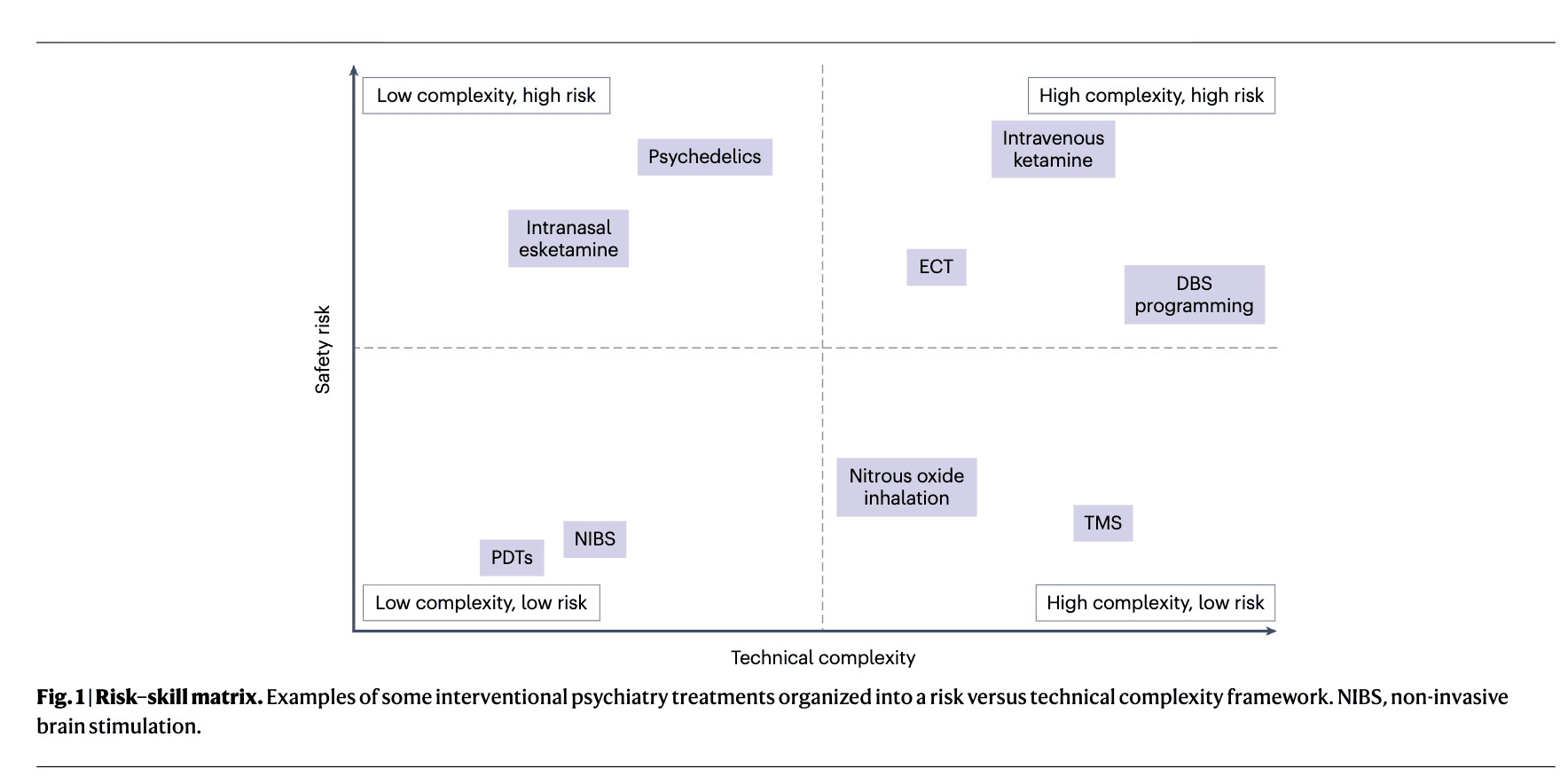
Job Description: Psychiatrists Seek to Define ‘Interventional Psychiatry’. In a comment published in Nature Mental Health, several psychiatrists seek to define ‘interventional psychiatry’ and provide what they describe as “a framework for professional identity and practice evolution.” They also present a ‘risk-skill matrix’ of various interventional modalities, including psychedelics.
1960s ‘Manual for the Use of LSD’ Holds Up, According to Psychedelics Users. A survey of nearly 600 psychedelics users suggests that almost all of the advice contained in a 1967 pamphlet about LSD use holds up. That pamphlet, titled Session Games People Play: A Manual for the Use of LSD, was sold for $1 and offered up best practices for the use of psychedelics, with a focus on LSD.
Ethics Corner
Each Issue, Eddie Jacobs and Bryony Insua-Summerhays explore an ethical question or topic as it pertains to psychedelic practice.
Delivery After Approval: Labels, Payment, and Evidence
As a bimonthly publication, there surely are now not many editions of The Psychedelic Practitioner left until the first FDA-approved psychedelic product. Psilocybin first, probably, with MDMA, psilocybin (again), and LSD not far behind. With not much time left, there are still many questions left open. Among them, who staffs a session and for how long, how many sessions treatment will include, what services will be covered and how.
The answers to the many open questions about delivery will in sum add up to a theory of treatment for clinical psychedelic interventions: what the treatment consists of, delivered by whom, over what period, judged by what measure. They’ll shape who can access treatment, where it is viable, what counts as treatment response, and the shape of what the field learns post-licensing, since whatever model of treatment is paid for will generate the first tranche of real-world data.
Some components of the answer are beginning to form. Compass Pathways expects its psilocybin label to cover the activities needed for safety, leaving broader questions about delivery to the practice of medicine. That does not leave providers a free hand. Payment rules, credentialling, network requirements and malpractice pressures will help decide what ‘clinical judgment’ can afford to look like.
Support, presence, psychotherapy
Hourly billing codes for psychedelic sessions were introduced in 2024. While a code makes a service billable, it doesn’t set a price – that will depend on the payer’s contract and how the provider is paid. Compass’s chief patient officer intends that “however long the room is occupied, it’s being paid.” Community health centres, usually paid a bundled rate per visit, earn as much for a short appointment as for much longer engagements. Their national association recently told the Health Resources and Services Administration (HRSA) that this is “misaligned with an all-day, multi-staff, single-patient service.” Such centres already underuse esketamine for want of space, trained staff, and adequate payment. Even with agreed-upon billing codes, the atypical format of psychedelic therapies might make treatment viable in one setting and not another.
Upstream administrative decisions will likely shape the course of treatment the same way. If a treatment label covers a one- or two-dose induction, with additional doses thereafter left to clinical judgment, as some executives anticipate, that judgment will be exercised inside coverage rules – in effect, standards of practice set by whoever pays. Published policies for the closest analogue we have, esketamine, tie continued treatment to documented improvements on a depression scale. It might be the same for psilocybin, but there’s no a priori choice of where to set a threshold. Compass’s phase 3 trials counted a 25% fall in MADRS score as clinically meaningful; its phase 2b reporting used the conventional 50%.
Codes and coverage rules likewise shape what will happen in the room. Much of what a skilled facilitator contributes is what they refrain from doing – filling a silence, steering the experience – while staying ready to act. While psychotherapeutic theory has terms for this (containment, abstinence, therapeutic presence), billing codes and categories do not. Billed as observation, much of the relational work drops out of the record. As psychotherapy, each moment is read as expensive intervention. As overhead, it becomes something to minimise.
How much should the label say?
Developers’ pivot away from psychotherapy ostensibly makes the pure drug effect more easily isolable for regulatory review, handing questions of delivery to clinicians (and, in practice, payers). There are sound reasons for labels to say relatively little about delivery. Patients differ – some might need only one preparation session, others four – and clinicians are better placed to judge the patient in front of them. And no dismantling study has separated the effects of drug, support, setting and psychotherapy, so a label prescribing a delivery model would fix in place whichever model the sponsor happened to test.
The case for precision runs through payers. At September’s FDA hearing, Amna Aslam of Radial argued that insurers write coverage criteria from label text, so an un(der)defined term like ‘psychological support’ lets each payer define it, perhaps as narrowly as possible. At the same session, the University of Alabama’s Peter Hendricks proposed that each drug label should state whichever model the evidence supports (monitoring, support, or psychotherapy), so that staffing is fixed by it: blanket requirements for licensed psychotherapists in every context, he noted, would have the biggest access implications for publicly insured patients. Precision might also protect quality. With a defined model, it is harder to sell a watered-down version under the same name.
What will the first data tell us?
After approval, commercial incentives for isolating the contributions of psychosocial components may weaken. The drugs will be regulated products, and responsibility for the surrounding care will be distributed across clinicians, professional associations, payers, and states.
The first post-licensing outcome data will tell us whether psilocybin ‘works’ in the real world, but it will reflect the constraints embedded into the system: who was allowed to deliver care; what they were paid to do and how long for; which patients were permitted and denied additional doses; and which outcomes were consistently recorded. This is unavoidable, but risks mistaking the effects of one staffing and delivery model for the therapeutic potential of psychedelics per se.
A psychiatry resident raised a similar question about harms at an APA meeting in May. When adverse events do occur, will they be attributed to the drug, or to the absence of a therapeutic container? Recording delivery conditions alongside outcomes and harms would impose costs, particularly on smaller clinics, but would show which practices matter most, and which are costly for little gain. Our first theory of treatment for clinical psychedelics may be implicitly carried in billing codes and coverage rules; revising it will depend on our ability to distinguish the effects of a particular treatment model from the potential of the treatment itself.
Dr. Eddie Jacobs and Dr. Bryony Insua-Summerhays
Ethics Corner Writers

Thank you for Reading
Our next Issue will publish in mid-December.
Thank you for reading!
Alice Lineham and Josh Hardman
The Editors, The Psychedelic Practitioner
Subscribe to future issues
Practice-focused insights, delivered to your inbox.
Issues are currently published every other month. Join our free newsletter to receive them:
By signing up, you agree to our privacy policy. You can unsubscribe at any time.