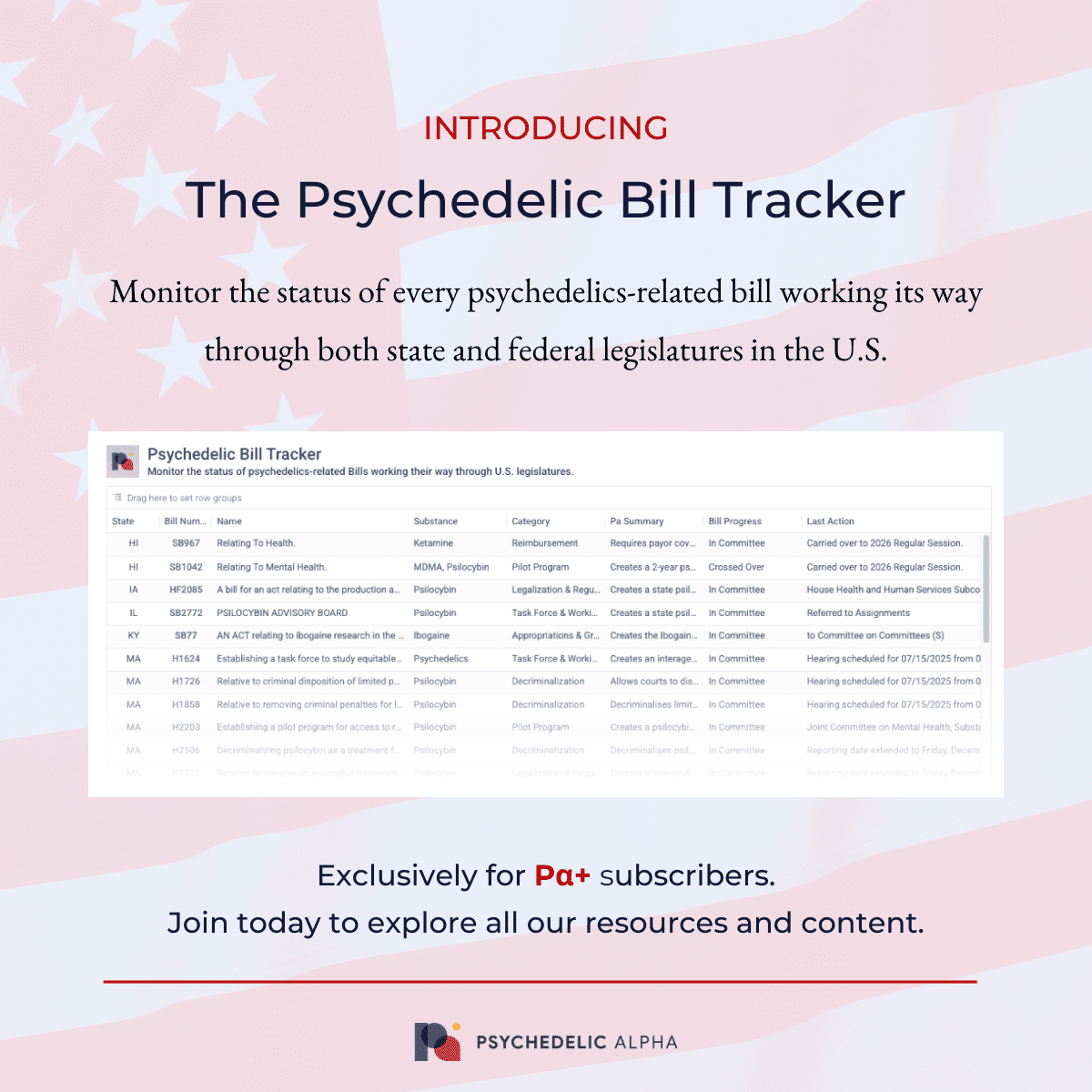
Pα+ Psychedelic Bill Tracker
Psychedelic Alpha ↗
Monitor the status of every psychedelics-related bill working its way through both state and federal legislatures in the U.S. with our new Psychedelic Bill Tracker.
Explore our 🎯 Q1 2026 Psychedelic Pipeline Bullseye Charts.


The conference offers a unique opportunity to delve into the rapidly evolving field of psychedelic science and its potential in healthcare. Plenary talks and panel sessions will see a wide range of topics covered including drug scheduling, the future of psychedelic science, clinical trial design, research protocols, pain and psychedelics and precision medicine in mental health care
More Info + RegistrationThe biggest headline in the psychedelics field this week was outgoing New Jersey Governor Phil Murphy’s signing S2283 into law, establishing a $6M psilocybin pilot program in the state. While some outlets hailed this as the fourth state-regulated psilocybin access system in the U.S., it does not create a psilocybin services system like those seen in Oregon and Colorado.
Instead, the legislation creates a two-year pilot program that will see the drug researched at three hospitals in New Jersey, which will each receive $2M, in accordance with FDA and DEA regulations. (Compare that, for example, to Oregon and Colorado, which defy DEA scheduling and are not aligned with FDA.)
The bill did originally envisage the creation of an Oregon-style system featuring service centres and the like. But it was stripped down as it progressed through the state legislature, much to the chagrin of some in the psychedelic policy reform movement.
We may see more state-sponsored psychedelic research bills pass in the coming months, with several introduced already. You can track 55 bills that are in motion in the state and at the federal level via our new Psychedelic Bill Tracker.
While legislators seem increasingly open to psychedelic policy initiatives, Americans remain somewhat divided, according to a new Ipsos/Psychedelic Alpha poll released this week. You can read the topline over at Ipsos and a deeper dive in our latest Bulletin.
Aside from their attitudes, we also got a look at how Americans are using psychedelics and related substances last week, as RAND shared the first cut of data from its 2025 survey. It reports, among other things, that around 10 million U.S. adults microdosed last year.
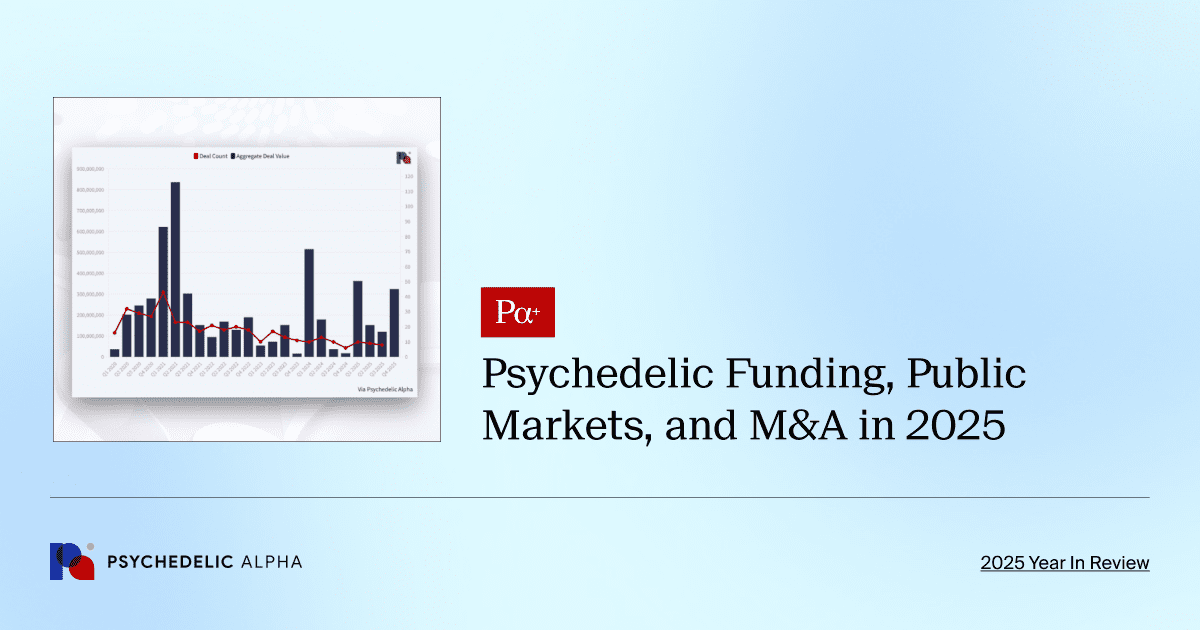
Elsewhere, our 2025 Year in Review looked at funding, public markets, and M&A activity in the field last year. We reported a relatively strong close to the year in terms of financing activity and a bullish sentiment on the public markets.
Our latest Op-Ed from that same Year in Review series came from Helena Aicher, a researcher and psychotherapist working within Switzerland’s framework for limited medical use. There, Aicher reflects on how Europe’s psychedelics landscape evolved in 2025.
It certainly seems like the pace of developments is not letting up, with plenty to cover on the policy reform side. Pα+ subscribers should keep an eye out for our first roundup of 2026 on that front.
Below, you will find your Psychedelic News Feed, a one-stop digest for the latest coverage of psychedelics business, policy, research and beyond.
Josh Hardman
Founder & Editor
Pα+ Psychedelic Bill Tracker
Monitor the status of every psychedelics-related bill working its way through both state and federal legislatures in the U.S. with our new Psychedelic Bill Tracker.
Psychedelic Bulletin 218

The psychedelics field’s busy start to 2026 continued this week.
On Monday, MindMed unveiled a full overhaul of its brand, including a new name: Definium Therapeutics. In doing so, it became the second Phase 3 psychedelic drug developer to rebrand this year, after Cybin became Helus Pharma last week.
The companies are presumably hoping to distance themselves from their ‘shroom stocks’ vintage, with names like MindMed and Cybin perhaps indelibly associated with a 2021 ‘shroom boom’ that was driven in part by frothy markets and retail investor excitement. That era was replete with the likes of Kevin O’Leary, r/wallstreetbets analyses and, in the case of Cybin, some questionable stock promotion efforts.
Definium says its name is a combination of the Latin ‘definio’ and ‘infinitum’, literally meaning ‘to bound’ and ‘infinite’, respectively. Perhaps it reflects an ambition to sound equal parts transformative and nondescript, limitless but in a limited, safe kind of way.
Speaking of safety, U.S. National Institute on Drug Abuse (NIDA) Director Nora Volkow said last year that ibogaine is unlikely to ever receive approval for opioid addiction due to its cardiac toxicity, throwing cold water on a surge of interest in the drug that revved up in 2025 and continues to mount today.
But this week, Volkow shared an article on ‘Nora’s Blog’, which lives on the NIDA website, that asks: “Could psychedelics harness neuroplasticity to treat addiction and other mental illness?”
In it, the NIDA Director concludes that “[h]arnessing the brain’s natural plasticity in effecting therapeutic gains is an intuitively obvious avenue for drug development including the development of psychedelics as therapeutics”, adding that basic research might deliver value beyond new treatments, too. “The profoundly meaningful experiences some people report following use of psychedelics could give neuroscientists valuable insights into meaning-making and the ability of the brain to change in a healthy direction after addiction or trauma”, she went on.
Under Volkow, NIDA has funded trials on psilocybin for smoking cessation, psilocybin and ketamine in the treatment of opioid use disorder, and ketamine for stimulant use disorder; so it’s not as though Volkow has blocked such work via the Institute. But it is curious that the Director chose to pen this particular blog entry, which serves as a call for further research into psychedelics as therapeutics and provides a sketch of that research agenda, now.
Also on the research and drug development front, Reunion Neuroscience announced this week that it expects to conduct just one Phase 3 trial to support the approval of its 4-OH-DiPT candidate in postpartum depression. That comes after FDA signalled a shift toward expecting just one Phase 3 by default late last year. We shouldn’t expect every psychedelic drug developer to follow this path, however, with factors like target indications and a drug’s profile coming into play.
On the state front, New Jersey could fund psilocybin research via S2283, which passed the Senate earlier this week. The Act would establish a psilocybin research pilot program and fund it to the tune of $6M. It has now passed both chambers with convincing margins and sits on Governor Phil Murphy’s (D) desk awaiting a signature.
After a busy start to the week, the second half of the work week saw flashy headlines announce that former Senator Kyrsten Sinema is the subject of a lawsuit filed by the ex-wife of one of her staffers, Matthew Ammel. In a complaint that has now been transferred to federal court, Ammel’s ex-wife accuses Sinema of breaking up their marriage.
While, on the face of it, the story has little to do with psychedelics, the suit alleges that Sinema, a licensed clinical social worker, asked Ammel to bring MDMA on a work trip, where she apparently intended to “guide him through a psychedelic experience”.
Indeed, Sinema is an outspoken psychedelics advocate, particularly on the topic of ibogaine. She became interested in advocating for ibogaine, she told me last summer, after Ammel went to Mexico to take the drug and found it beneficial. But, as we have covered in these pages, some in the field have been keen to distance themselves from Sinema, as the former Democrat-turned-Independent politician was already controversial. Some tell me that she inserted herself as a spokesperson for the field, while in other cases, it does appear that she has been welcomed in, especially in some corners of the ibogaine advocacy push.
More: Last summer, I had a somewhat spiky interview with Sinema, who attended Psychedelic Science in Denver with Ammel and a colleague from Hogan Lovells. Later, in a Bulletin, I asked: “What is Kyrsten Sinema Selling?”
Ammel is facing legal troubles, too, after he allegedly threatened his rental property manager last November and was involuntarily committed to a hospital. There, he is accused of attempting to strangle a member of the hospital staff. He was taken to jail on felony charges and released on a $10,000 bond, with a hearing scheduled for the end of January.
It appears that Ammel has been in Gabon, the Central African country, this week taking part in the International Conference on Iboga and Ibogaine, which was co-organised by Americans for Ibogaine.
“Gabon is the ancestral home of iboga”, a statement by Americans for Ibogaine CEO Bryan Hubbard following the closing of the conference reads, “and we deeply value the conversations grounded in cultural respect, environmental stewardship, and science.”
It’s not clear that Sinema shares that view. When I was sitting with Sinema, Ammel, and their law firm colleague in Denver last summer, I asked the former Senator about her thoughts on the role of traditional knowledge-holders like certain groups in Gabon. The Indigenous perspective, she told me bluntly, “is not my problem”.
In that same interview, Sinema told me: “So, because you’re British and you don’t know me, one thing I will tell you is, I am well known for having no drama. I do not engage in drama.” But it certainly looks like the drama has found its way to Sinema, who is facing a fresh bout of media attention following the surfacing of the lawsuit. In Salt Lake City on Friday, hecklers disrupted Sinema’s conversation with Utah Governor Spencer Cox about… disruption.
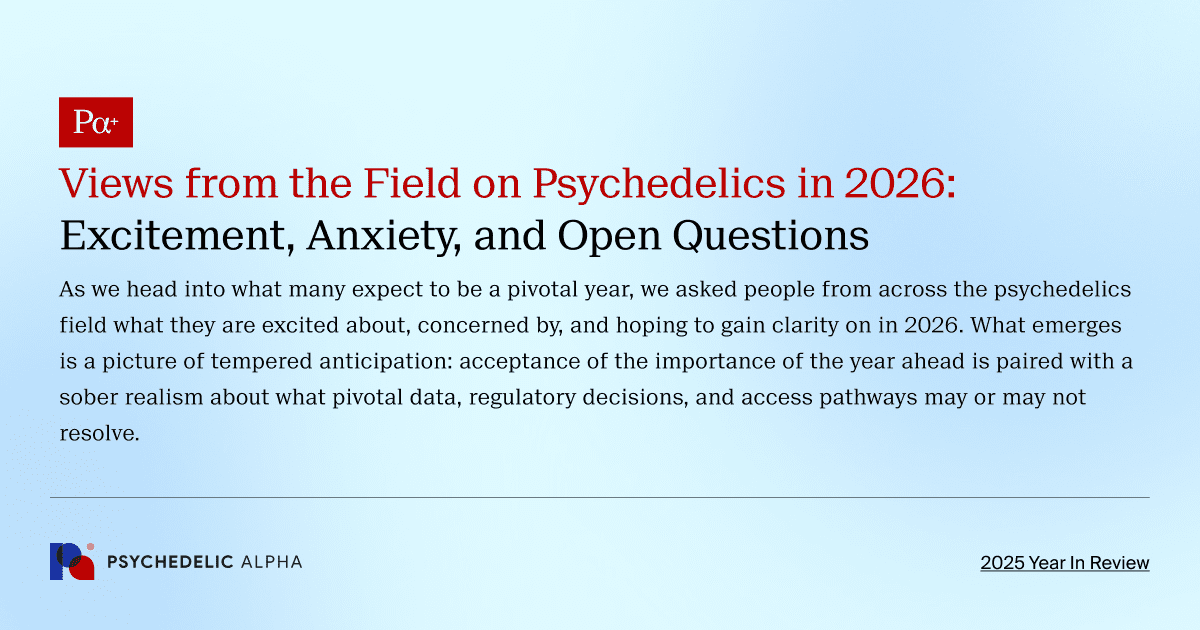
Tabloids aside, here at Psychedelic Alpha, our 2025 Year in Review shifts to focusing on perspectives from across the field. To that end, we published a Views from the Field piece where several experts share what they’re excited and concerned about for 2026, and an open question they hope to get more clarity on.
Elsewhere, we published an Op-Ed from Healing Advocacy Fund Executive Director Taylor West on ‘what state psychedelics programs are teaching us’, and a Guest Article by Monica Schweickle on how Australia’s ‘psychedelic experiment’ is panning out.
UBC also published a brief interview I did with them before the holidays. We spoke about why I founded Psychedelic Alpha nearly six years ago, how we aim to act as a counterbalance to both stigma and hype, what I’m expecting to see in psychedelics this year, and more.
This was a slightly longer Editor’s note than usual. If you enjoyed it and would like much, much more analysis and news, consider subscribing to Pα+ to receive all our content, including our flagship Bulletins.
Below, you will find your Psychedelic News Feed, a one-stop digest for the latest coverage of psychedelics business, policy, research and beyond.
Josh Hardman
Founder & Editor
The conference offers a unique opportunity to delve into the rapidly evolving field of psychedelic science and its potential in healthcare. Plenary talks and panel sessions will see a wide range of topics covered including drug scheduling, the future of psychedelic science, clinical trial design, research protocols, pain and psychedelics and precision medicine in mental health care
More Info + RegistrationAs expected, 2026 is off to a busy start, with the first full week of the new year delivering no shortage of headlines.
On the drug development front, FDA finally accepted GH Research’s inhaled 5-MeO-DMT Investigational New Drug (IND) application after placing it on hold for more than two years, clearing the way for a Phase 3 program that the company hopes to launch this year. AtaiBeckley, meanwhile, expects to launch its own Phase 3 5-MeO-DMT program in Q2, with its intranasal formulation. Both companies are targeting treatment-resistant depression.
FDA also accepted an IND from Compass Pathways, allowing it to progress with a Phase 2b/3 program studying its psilocybin candidate in PTSD. It hopes to begin screening patients in the coming months.
Elsewhere, Cybin officially rebranded to Helus Pharma and listed on the Nasdaq this week, ringing the bell on Monday morning. And Gilgamesh Pharma printed positive topline data from a Phase 2a study of its NMDA receptor antagonist, GM-1020, in major depressive disorder. It’s another win for the company, which sold its lead candidate, bretisilocin, to AbbVie last year in a deal valued at up to $1.2bn.
Here on Psychedelic Alpha, we discussed all of these updates, and much more, in our first Bulletin of 2026. As a reminder, our flagship Psychedelic Bulletins provide one-stop coverage of developments across the psychedelics field. Published multiple times a month, they synthesise news, data, and analysis into a coherent picture of how the field is evolving, helping readers maintain continuity and perspective over time. They’re exclusively for Pα+ members: subscribe today.
We also shared the third and final session from our 2025 Year in Review video series, where I walk you through what happened in 2025 and where the field stands today; what we might expect to see in 2026; and, some potential futures and broader open questions the field faces. Pα+ subscribers can now watch all of the videos in the series.
Below, you will find your Psychedelic News Feed, a one-stop digest for the latest coverage of psychedelics business, policy, research and beyond.
Josh Hardman
Founder & Editor

Psychedelic Bulletin 217
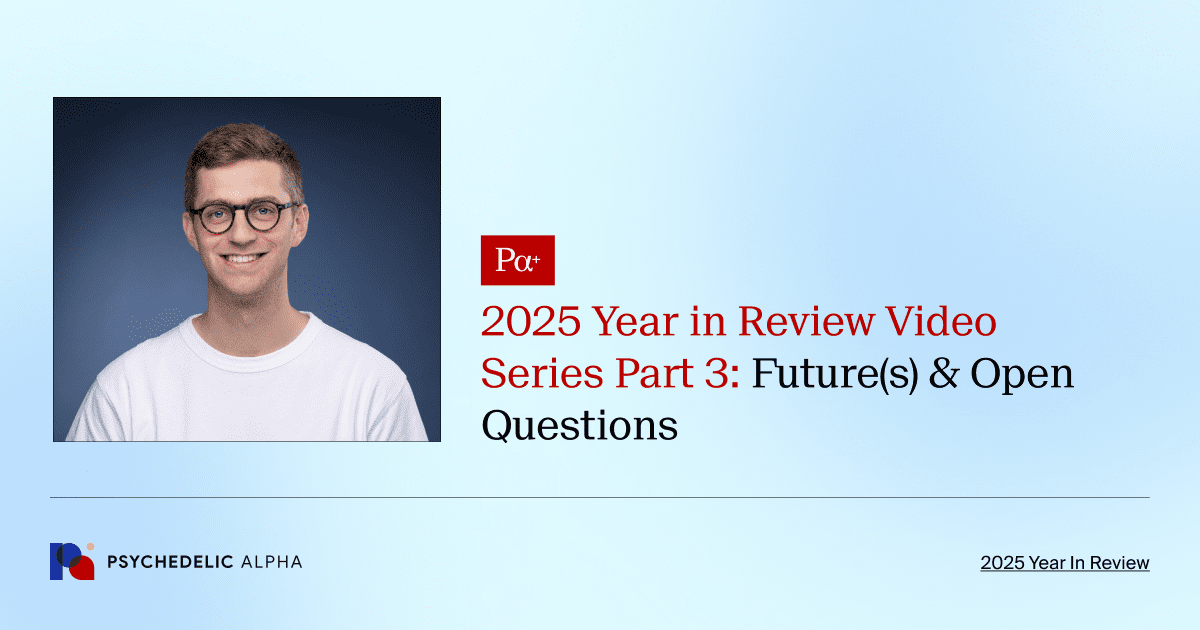
Part 3: Future(s) & Open Questions
🎥 Out now: Part 3 of our 3-part 2025 Year in Review video Series
Happy New Year!
As we closed out the year, we highlighted the ten stories that defined psychedelic drug development, policy, and access in 2025. You can read those 10 standout stories now: we lifted the Pα+ paywall for all of the articles mentioned in our rundown for the month of January.
As 2026 gets underway in earnest, our 2025 Year in Review content begins to adopt a more forward-looking tone. This week, we published the second video in a three-part series where I look ahead to 2026 and consider potential FDA approvals, Phase 3 readouts, alternative pathways to access, and much more. Pα+ subscribers can watch the video now.
Things were relatively quiet in mainstream media this week. I hope that you, too, found a little bit of quiet ahead of what looks set to be a very busy year.
Below, you will find your Psychedelic News Feed, a one-stop digest for the latest coverage of psychedelics business, policy, research and beyond.
Josh Hardman
Founder & Editor
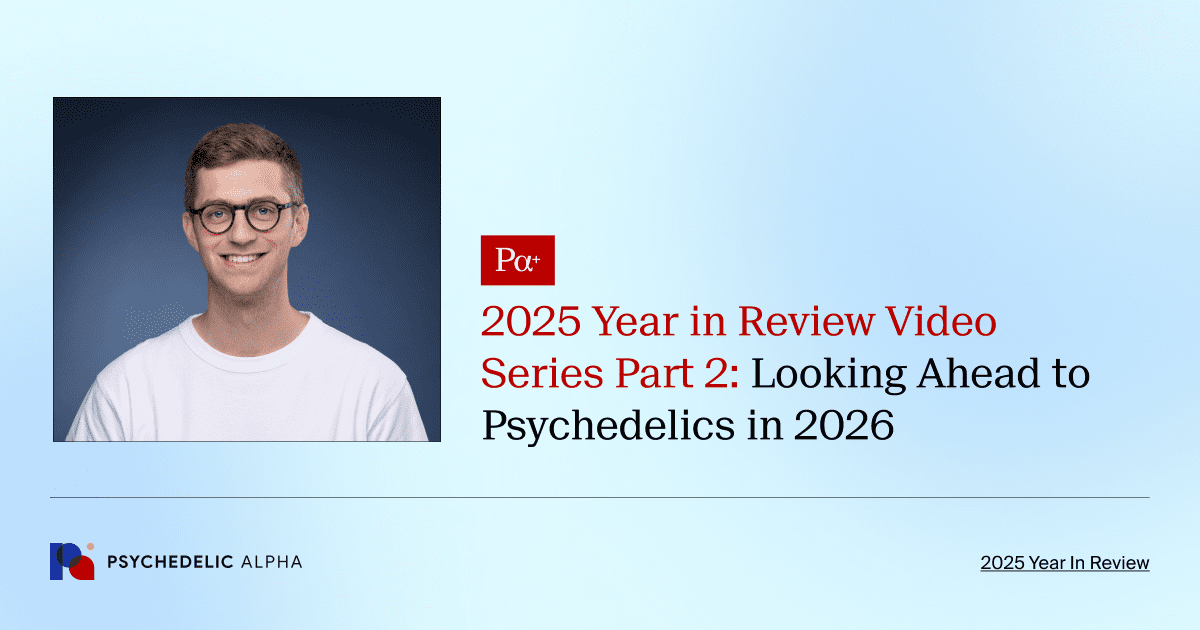
Part 2: Looking Ahead to Psychedelics in 2026
🎥 Out now: Part 2 of our 3-part 2025 Year in Review video Series
Our Founder & Editor, Josh Hardman, looks ahead to 2026 via a narrated presentation. In this video, Hardman considers potential FDA approvals, Phase 3 readouts, alternative pathways to access, and more. Watch now on our website.
2025 Year in Review: 10 Standout Stories in Psychedelics
We have lifted the paywall on the Pα+ stories featured in this piece for the month of January.
Free subscribers receive a weekly round-up of news on psychedelics, as well as the occasional article.
Receive regular bulletins, articles, interviews with insiders and quick-take analysis of major stories and developments.
Teams, groups and corporate pricing plans are available, please get in touch via email to learn more.
Front-row access to the psychedelics space: breaking bulletins, in-depth articles, insider interviews and sharp analysis of the moments that matter—from major trial results and funding rounds to policy shifts shaping the future. Plus, full access to our complete archive and Library.
Learn More| Free | ||
|---|---|---|
| Weekly Psychedelic News Feed | ||
| Occasional Articles & Free Resources | ||
| Psychedelic Bulletins (In-Depth Briefings, Multiple per Month) | ||
| Quick-Take Analysis of Major Developments | ||
| In-Depth Articles & Deep Dives | ||
| Exclusive Interviews with Insiders & KOLs | ||
| Quarterly Video Briefings | ||
| Exclusive Tools & Data Resources | ||
| Library of Primers & Explainers | ||
|
Subscribe Now |
||
Independent data-driven reporting, analysis and commentary on the psychedelics space: from business and drug development through to policy reform and research.
By signing up, you agree to our privacy policy. You can unsubscribe at any time.
Aside from group pricing, we also offer bespoke reports and regular briefings. Get in touch to discuss.