A weekly round-up of the
latest coverage in psychedelics.
Receive the free weekly digest straight to your inbox every week
By signing up, you agree to our privacy policy. You can
unsubscribe at any time.
October 20 – 26, 2025
A Note from the Editor
This week was a fine example of how surging optimism among many in the psychedelics field exists alongside calls for a tempering of excitement.
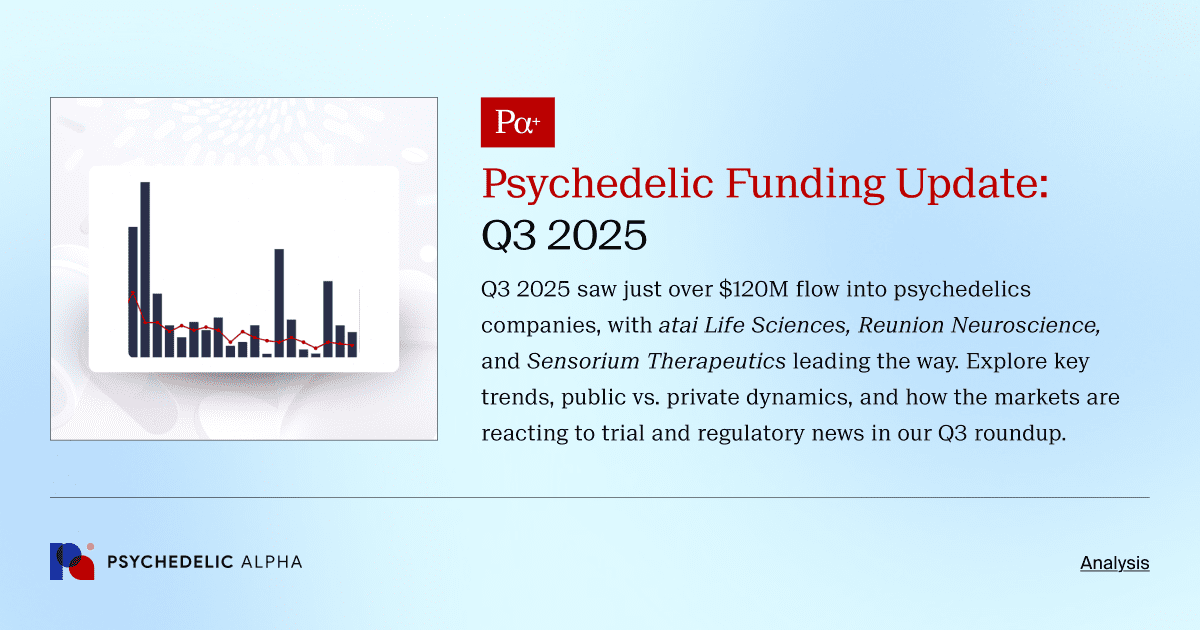
Our analysis of the Q3 2025 Psychedelic Investor Survey revealed record levels of optimism and positive sentiment, yet actual financing data from the same quarter showed a drop in allocation to the field. Taken together, this suggests that funding is lagging sentiment.
But, last week, atai Life Sciences closed a $150M public financing on the back of its receipt of FDA breakthrough therapy status for BPL-003, Beckley Psytech’s intranasal 5-MeO-DMT candidate for treatment-resistant depression. (atai is in the process of acquiring Beckley.) Might this be the beginning of a more active fundraising environment to end the year?
Elsewhere, at least two recent studies have delivered null findings. A study of the longitudinal effects of psilocybin truffle microdosing found no enhancement in self-reported mood or cognition. And, a 62-participant study that saw participants receive IV ketamine or midazolam twice-weekly for four weeks found no significant difference in outcomes between the two groups. (We covered both in our most recent Bulletin.) The latter study, in particular, has sparked plenty of discussion among researchers.
In the mainstream media, BBC Futurepublished an interesting look at the impact of Erowid, “the 30-year-old drug website that transformed psychedelic research”. Women’s Health, meanwhile, explored “why more midlife women are turning to psychedelics to heal their minds”.
Below, you will find your Psychedelic News Feed, a one-stop digest for the latest coverage of psychedelics business, policy, research and beyond.
It’s been another busy week in the psychedelics field!
I’m currently in Japan, where psychedelic research is beginning to find its footing. Earlier this week, I met with Dr. Hiroyuki Uchida, a psychiatrist who is leading Asia’s first modern clinical trial of psilocybin therapy for treatment-resistant depression (TRD). I interviewed Dr. Uchida earlier this year (we published it in both English and Japanese), so it was a real pleasure to meet him in person at Keio University Hospital, a sprawling complex in the country’s capital.
I was struck by just how much work it takes to get a psychedelic trial started in a country like Japan. In many Western countries, psychedelic studies are quickly becoming part of the furniture, with entities like Institutional Review Boards increasingly familiar and comfortable with them. But Dr. Uchida and co. were, in many regards, starting from scratch when they set out to launch a study a few years ago. Aside from securing buy-in from the necessary stakeholders, Uchida’s group also had to translate scales like the mystical experience questionnaire (MEQ) and get the study drug into Japan, a country with notoriously strict drug laws. But he persevered, and today the trial has nearly finished dosing the twelve patients it aimed to enrol. I will share some more brief thoughts on Japan’s psychedelic research scene in our next Bulletin.
Outside of Japan, plenty has happened this week, including:
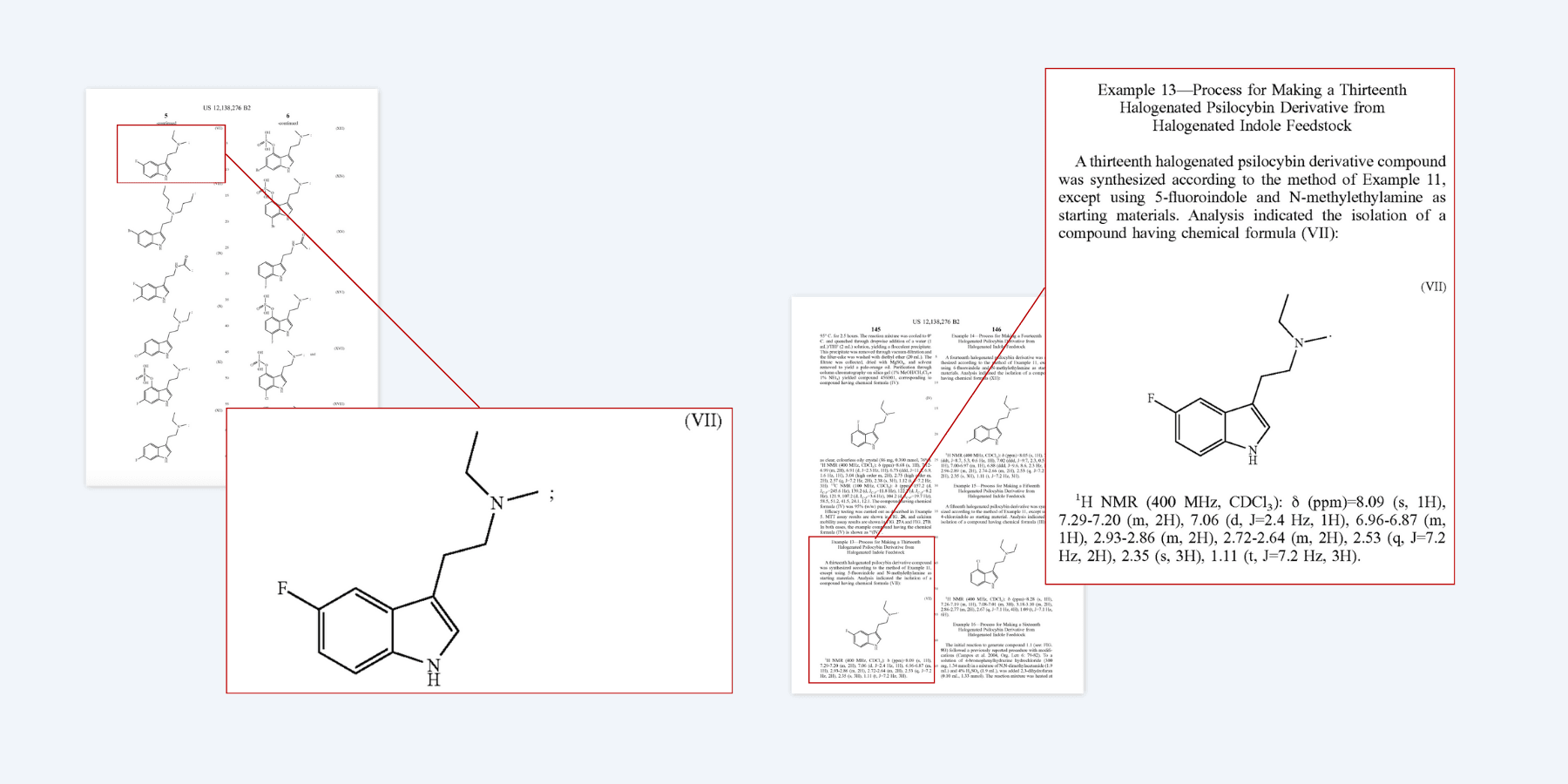
AbbVie’s purchase of Gilgamesh Pharmaceuticals’ lead psychedelic candidate, bretisilocin, has been completed (the candidate also appears to be the subject of a patent dispute: more to come next week, for our Pα+subscribers)
The FDA did not award one of its new Commissioner’s National Priority Vouchers to a psychedelic drug developer, nor did it award one to any mental health program
But, FDA did award Breakthrough Therapy status to Beckley Psytech and atai Life Sciences’ intranasal 5-MeO-DMT candidate (BPL-003) for TRD
California Governor Gavin Newsom signed a psychedelics Bill into law, with AB 1103 seeking to catalyse psychedelic research in the Golden State by reducing a key bureaucratic hurdle
We will cover all this, and more, in Bulletin 211 next week, which is exclusively for our Pα+ subscribers.
It was a very busy week here at Psychedelic Alpha. On Thursday, we launched The Psychedelic Practitioner, a new publication designed specifically for therapists, clinicians, facilitators, and other professionals working with—or preparing to work with—psychedelic therapies and related treatments. Issue 1 is now available to read, and we welcome your feedback via the survey.
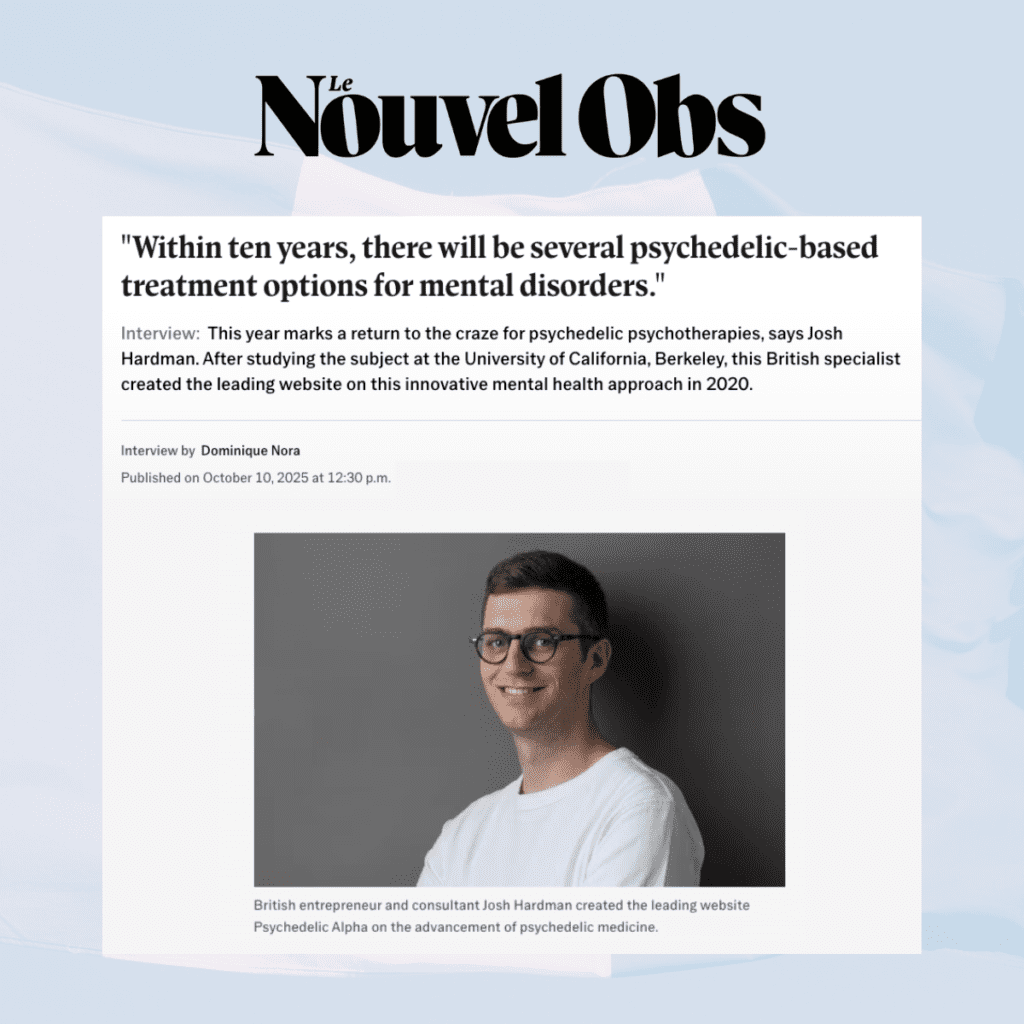
Friday was World Mental Health Day, which saw media outlets across the world spotlighting psychedelics’ potential in this realm. I was very pleased that my interview with journalist Dominique Nora was featured in French magazine Le Nouvel Obs’ Friday special. There, I discussed how the psychedelics field has changed in the past half-decade, what the pipeline looks like today, the challenges that psychedelic studies and rollout are facing, or might face, and a brief outlook on the future of the field.
Elsewhere, CBS News featured our U.S. psychedelic laws tracker in a segment on “The rise of psychedelic-assisted therapy for mental health treatment”, which saw Dr. Rachel Yehuda interviewed by the morning show’s anchors.
But the week ended on a sombre note, as we learned that Dr. Nolan Williams had died by suicide. Williams was a Stanford researcher whose work reshaped modern brain stimulation treatments for depression and suicidality. More recently, he became a prominent voice in the psychedelics research field, especially on the ibogaine front. This shocking news underscores the enormity of the struggle he fought to tackle through his own work. But those close to Williams have already expressed that his vision and compassion will continue to shape the field he redefined. Yesterday, psychiatrist Owen Scott Muir, who described Williams as both a friend and a hero, published a eulogy.
Below, you will find your Psychedelic News Feed, a one-stop digest for the latest coverage of psychedelics business, policy, research and beyond.
If you’re a podcast or radio fan, it’s a great time to be interested in psychedelics. Right now, you can listen to season 2 of theAltered States podcast, catch an episode on the evidence base for psychedelic medicine over atUndark, and enjoy a BBC Radio 4 segment on psychedelics for mental health hosted by Chris and Xand van Tulleken.
If you prefer to consume your media with your eyeballs, psychedelic scientist Manoj Doss and colleagues published a feature on ‘what we know, and what we think we know’ regarding how psychedelics affect the brain inThe Scientist. Elsewhere, we published our latest Bulletin, which included our Dispatch from the Borealis Psychedelic Science Summit as well as updates from across the field.
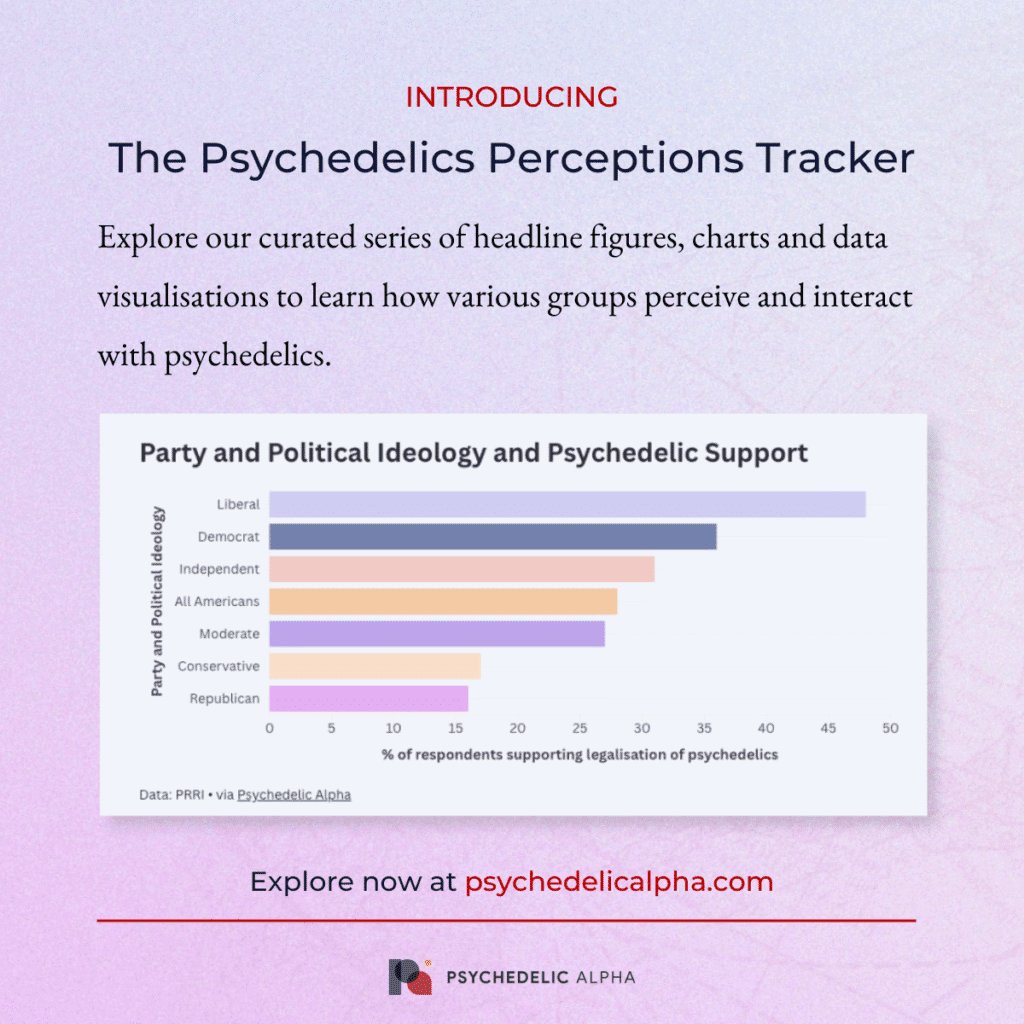
On Wednesday, we unveiled our latest resource: The Psychedelic Perceptions Tracker. We combed through opinion polls, surveys, government reports, and other datasets to produce a curated series of headline figures, charts, and data visualisations on how various groups perceive and interact with psychedelics.
This coming week, we again have something new to share: The Psychedelic Practitioner, a publication designed specifically for therapists, clinicians, facilitators, and other professionals working with—or preparing to work with—psychedelic therapies and psychedelic-based treatments. Keep an eye out in your inbox for that first Issue next week.
Anyhow, without further ado: Here’s your Psychedelic News Feed, a one-stop digest for the latest coverage of psychedelics business, policy, research and beyond.
Teams, groups and corporate pricing plans are available, please get in touch via email to learn more.
Benefits
Front-row access to the psychedelics space: breaking bulletins, in-depth articles, insider interviews and sharp analysis of the moments that matter—from major trial results and funding rounds to policy shifts shaping the future. Plus, full access to our complete archive and Library.
Independent data-driven reporting, analysis and commentary on the psychedelics space: from business and drug development through to policy reform and research.
Aside from group pricing, we also offer bespoke reports and regular briefings. Get in touch to discuss.
Subscribe to our
free newsletter
By signing up, you agree to our privacy policy. You can
unsubscribe at any time.
Manage Consent
To provide the best experience, we use technologies like cookies to store and/or access device information. Consenting to these technologies will allow us to process data such as browsing behaviour or unique IDs on this site. Not consenting or withdrawing consent may adversely affect certain features and functions.
Functional
Always active
The technical storage or access is strictly necessary for the legitimate purpose of enabling the use of a specific service explicitly requested by the subscriber or user, or for the sole purpose of carrying out the transmission of a communication over an electronic communications network.
Preferences
The technical storage or access is necessary for the legitimate purpose of storing preferences that are not requested by the subscriber or user.
Statistics
The technical storage or access that is used exclusively for statistical purposes.The technical storage or access that is used exclusively for anonymous statistical purposes. Without a subpoena, voluntary compliance on the part of your Internet Service Provider, or additional records from a third party, information stored or retrieved for this purpose alone cannot usually be used to identify you.
Marketing
The technical storage or access is required to create user profiles to send advertising, or to track the user on a website or across several websites for similar marketing purposes.